making barbecue sauce with summer fruit

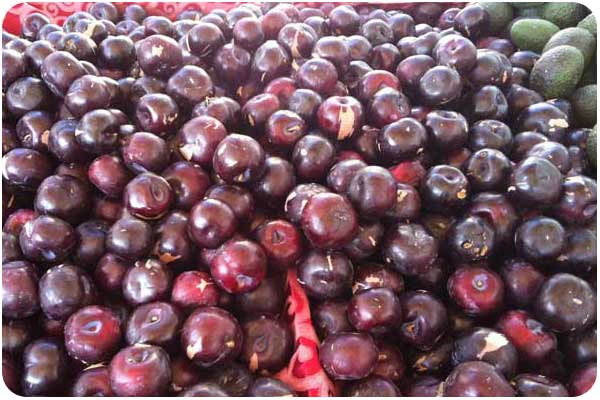
red plums
ripe red plums at the farmer's market

i’ve been experimenting with some old-timey recipes for BBQ sauce from back when it was made with mostly fruit. one caveat is, i’m trying to eliminate the sugar, so while old-timey stuff definitely had molasses, honey or sugar of some kind, i want to be able to slather with impunity, so i’m trying to limit the sugar to only that which can be found in summer stone fruits.
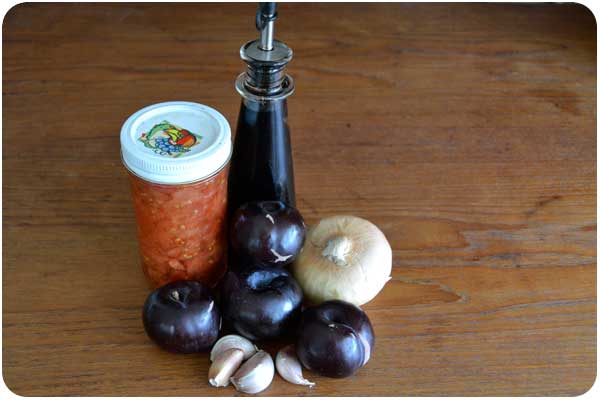
BBQ sauce ingredients
getting started with BBQ sauce ingredients

this week i worked with plums. one sauce is tomato-based, and one is just plums and a bunch of seasonings. do they taste just like store-bought sauce? kansas city? smokehouse? not really, but they do have a delicious, fruity, balsamic taste of their own, and i’m going to keep working on them.
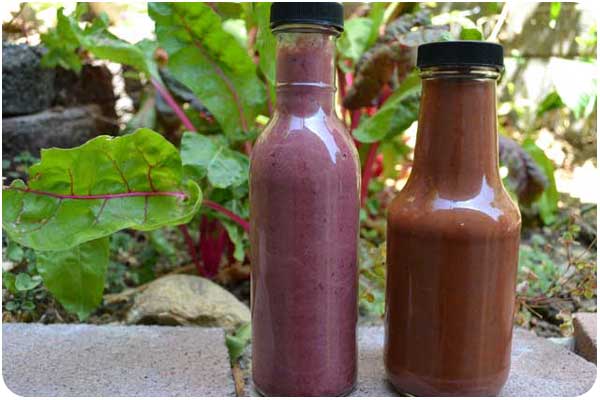
bottled plum BBQ sauces
seasoned plum and tomato plum barbecue sauces, puréed & bottled

plum & tomato barbecue sauce

1 medium onion, finely chopped
4 cloves garlic, crushed
14 oz canned tomato, crushed – or diced fresh
4 plums, chopped coarse
4 tbs balsamic vineager
1 tb canola oil
1 tb dijon mustard
1 tsp ground pepper
hot sauce (optional—i used my homemade 3-alarm sauce from last summer)

sauté onion in a heavy saucepan with canola oil and 1 tb of balsamic vinegar, 5 minutes. add crushed garlic and canned tomato and bring to a simmer over medium heat as you work with the plums.

cut plums around the seam, separate from the stone and chop close to 1/4″ dice over a plate to reserve any juice [here’s a quick demo on how to cut stone fruit. optional idea: halve the plums, toss with oil and balsamic vinegar and grill over a barbecue with hickory chips added, to get that smoky flavor [i’m trying this next time].

add plums, 3 tbs balsamic vinegar, dijon mustard, ground pepper, and hot sauce (if you’re using it), to the saucepan, stir and bring to a simmer. cover and simmer on low 50 min.

let sauce cool in the pan. bottle it chunky, or purée until smooth if desired.

seasoned plum barbecue sauce

1 medium onion, finely chopped
4 cloves garlic, crushed
4 plums, chopped coarse
1 tb canola oil
1 tb white wine vinegar
2 tbs balsamic vineager
1 tb vanilla
1 tb honey
1 tsp fresh or dried powdered ginger
1/2 tsp cumin
1/2 tsp cinnamon
1 tsp sesame oil

sauté onion in a heavy saucepan with canola oil and white wine vinegar, 5 minutes. cut plums around the seam, separate from the stone and chop close to 1/4″ dice over a plate to reserve any juice.

add diced plums and garlic to the saucepan, cover and simmer over medium-low heat, 50 minutes. when fruit is falling apart, turn off heat and add all remaining ingredients, stir to mix well, and let cool.

bottle it up chunky, or purée until smooth if desired.

roasted cherry cottage-cheesecake

fresh cherries
cherry season at the farmer's market

last week, the first cherries appeared at the farmer’s market. the ones i found ranged in color from a bright cranberry to a deep wine color, so i thought they might be a bit tart, but these were all sweet and delicious. normally, i love to eat them raw, so the challenge for me is setting some aside for my LAist recipe [seasonal eats: cherry season is upon us!]. cherry recipes are almost always desserts, so rather than fight it, this time i decided to experiment with adapting a dessert to be low-carb, low-sugar and gluten-free [an unintentional benefit].

i read a few suggestions about roasting cherries, which sounded interesting because the stones are supposed to impart an almond-extract flavor [perhaps this is why maraschino cherries taste like almond extract to me]. i’d also tried out blending cottage cheese smooth with a bit of milk and found it to be a really tasty dessert alternative, so i thought i’d bring the best of 3 worlds together: a coconut almond meal crust, roasted cherry filling, and whipped cottage cheese on top.

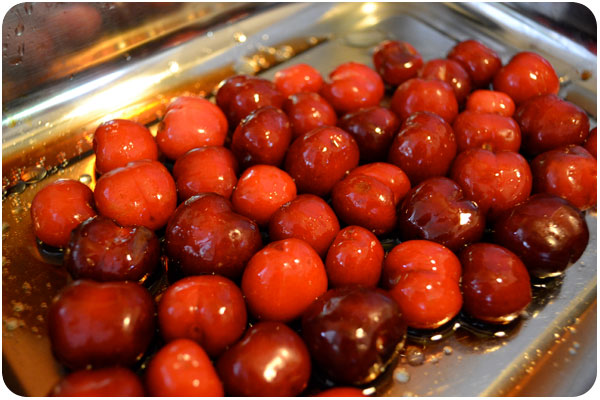
cherries ready to roast

recipes suggest to roast cherries about 30 minutes at 325, in anything from just oil to a mix of sauces. i found that mine all boiled away, but if you wanted to reserve the sauce, roasting covered would be a good idea. i decided to live dangerously and wing it, adding canola oil, balsamic vinegar, red wine and vanilla extract. i roasted 42 cherries to cover the bottom of a shallow 8″ pan, but once it was done, i could see more would have been fine. also, a deeper pan would allow for more fruit.

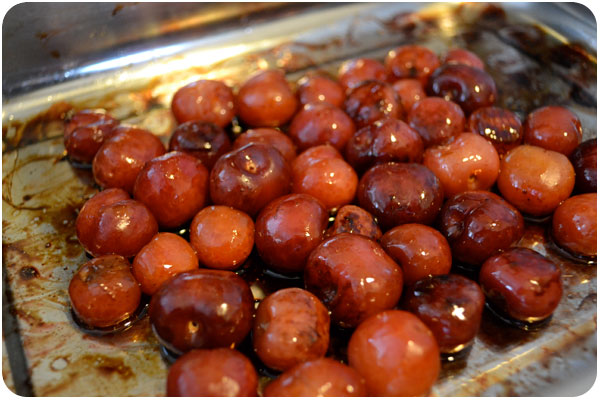
roasted cherries
roasted cherries

you might think cherries split and wilt with roasting, but very few of them did. they are a lot easier to separate from their stones after a roasting, so work with a knife and fork. if you want to be neat about it, you can cut them in half and scrape away the cherry from the stone and get perfect halves, or do like i did, mash the cherry with the fork, and then use the knife to separate the stone from wherever it is still attached.

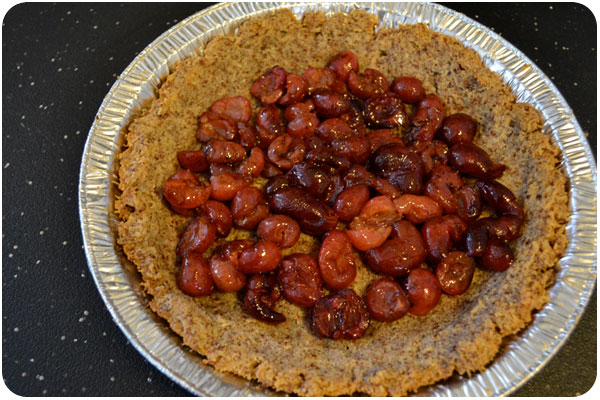
roasted cherries line the pie crust

for the pie crust, i used equal parts almond meal and shredded coconut, mashing and mixing together with coconut oil and an egg white. i prefer coconut oil because it solidifies around room temperature, so i could hand-form the crust in the pan and then chill until baking time. this crust bakes up quickly, 15 minutes at 325. if you time it right, you can get the cherries going, then stick the crust in the oven, and everything will be ready to assemble at once.

for the whipped cottage cheese, put 2 cups cottage cheese in the blender with 1 tb vanilla extract and 1 tb honey [or more, if you’re so inclined]. blend until smooth, scraping down the sides and mixing with a spoon and a splash of milk if it’s too thick to continue. if you choose to do this ahead of time, chill it so it thickens. if not, pour it over your cherry-filled crust, and chill to set. i found mine was a bit thinner than anticipated, but some time in the fridge will thicken it up.

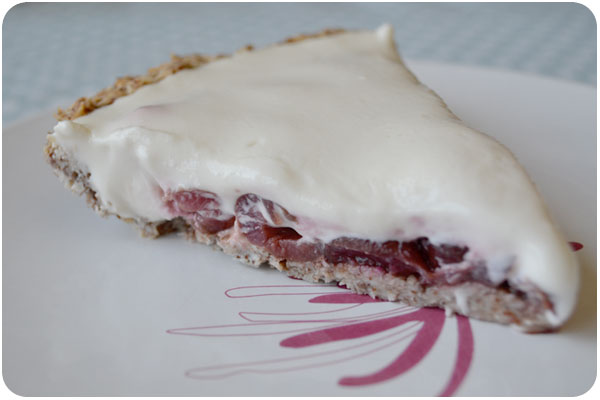
cherry cottage cheesecake

and there you have it! this cheesecake is not for everyone. some of the more sugar-inclined out there won’t like it much, but i find it to be a fun treat. also, after a few days, some of the cherry juice settles into the crust, which is quite delicious. ultimately, i think using mixed fruits is a great idea for this setup, roasted or raw, throw them in and enjoy!

a slice of roasted cherry cottage cheesecake

roasted cherry cottage-cheesecake

cherries:
42 cherries
1 tb canola oil
1 tb vanilla extract
1 tb balsamic vinegar
1 tb red wine
– tossed in a pan, coated & roasted at 325 for 30 min

crust:
1/2 cup almond meal
1/2 cup shredded coconut
2 tb coconut oil or butter
1 egg white
– mash together & press into pie tin
– bake 325 15 minutes

cottage cheese:
2 cups cottage cheese
2 tbs milk, as needed
1 tb vanilla extract
1 tb honey
blend until smooth, chill

assemble! eat!

fresh springtime fava beans

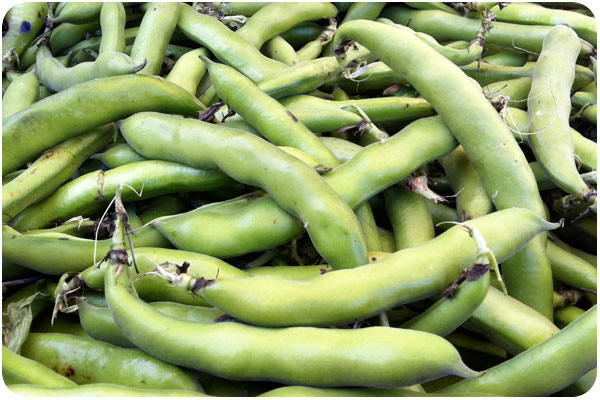
fava bean pods
fava beans in the pod at the farmer's market

without great culturally italian elders in my family, i missed out on fava beans growing up. recipes for fava beans can be confusing, because they usually don’t specify which to use, and the beans are very different when fresh vs. dried, so my first experience with shelling cooked dried favas left me utterly confused. this week i went looking for something interesting for seasonal eats, and just before i fell back on a staple like radishes, i noticed a few sellers with fava beans and decided to conquer this curiosity. turns out, other than taking a little time, they’re really easy to work with raw, and as i’ve learned, some of the best beans using dried favas call for them pureed without shelling. alright then!

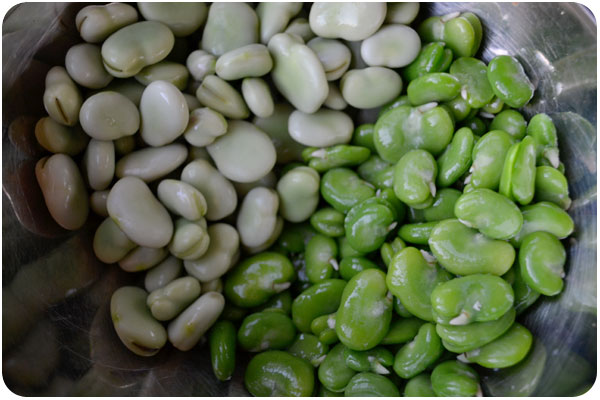
shelling fava beans
halfway through shelling blanched fava beans

while there are some recipes where you can use the beans in the shells, pods & all, such as grilling, usually you’ll be cracking one end of the pod, pulling it apart along the seam, and popping out the fava beans. the shells are fixed to the beans at this point, but a quick parboil will separate them, so you can pinch one end with your fingernail, squeeze the other and pop out the bean. at this point, if you want to eat them raw, they have a fresh, nutty flavor and would go great in a bean salad or with a light dressing.

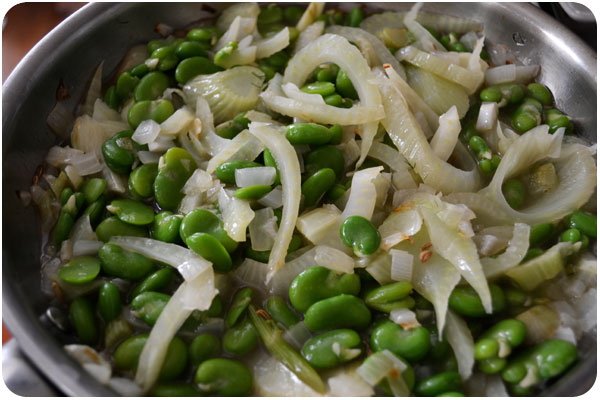
making fava fennel saute
sauteeing fresh shelled fava beans with fennel and onion

i decided to use as many spring flavors as i have in the house while keeping with italian flavors, and modified a fava bean & fennel saute to be vegetarian. the original recipe called for pancetta, which would be a great addition, as would sausage or bacon, or even a smaller quantity of anchovies.

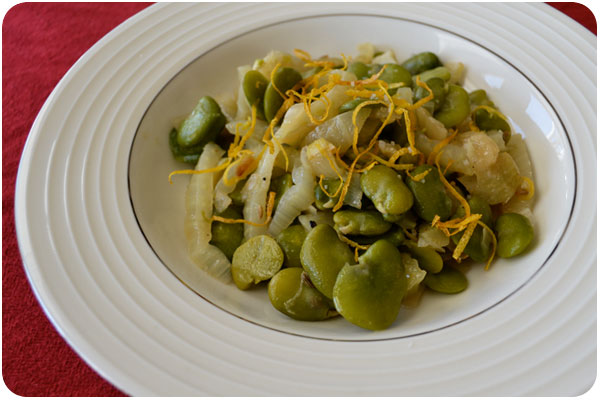
fava fennel saute
garnish your fava fennel saute with lemon zest and finishing salt

fresh fava & fennel saute
3 lbs fava beans, shelled
3 tb olive oil
1 medium onion, chopped
1 fresh fennel bulb, sliced
1 tsp fennel seeds
1.5 cups vegetable broth, heated to a simmer
zest and juice of 1 lemon
salt & pepper to taste, finishing salt to serve

saute onion and fennel in a large pan on med-high, 5 minutes. add fava beans and fennel seeds and toss to mix thoroughly. add vegetable broth and simmer 10 minutes.

turn off the heat, add lemon juice and half the lemon zest and season with salt and pepper to taste. to serve, garnish with remaining lemon zest and finishing salt of your choice. serves 4.

strawberry liqueur

strawberry_3pack
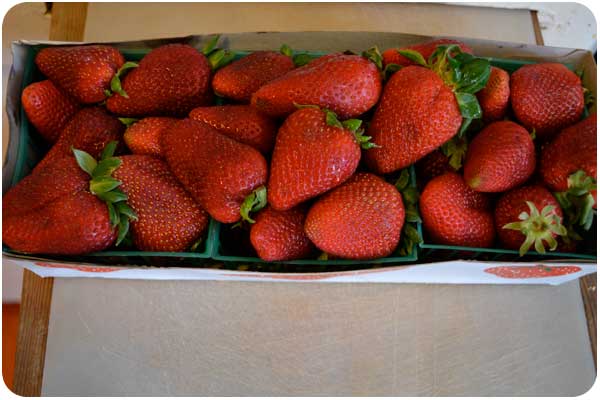
a 3-pack of strawberries fresh from the farmer's market.

with the coming of spring, strawberries have started to appear at farmer’s markets, and they’re finally looking ripe enough to buy. i bought my first 3-pack this weekend with the intention of making another batch of strawberry liqueur, based on this recipe.

destemming strawberries
removing the strawberry stem.

normally i’m an all-fruit-in kind of person, but when making infusions, i try to remove any green parts from fruit so it doesn’t affect the flavor. when preparing strawberries for a maceration infusion, half them lengthwise, and then use a pointed knife to cut a small trangle around the stem to remove it.

chopped strawberries
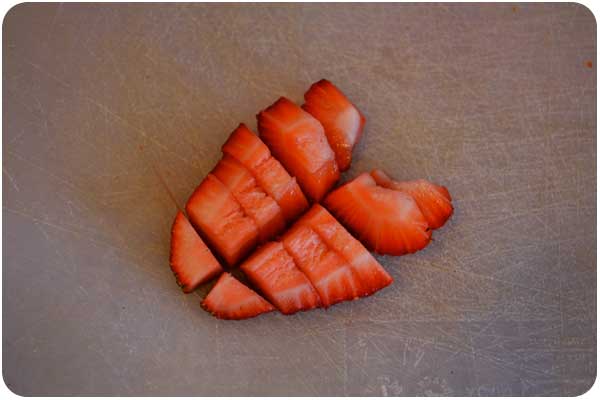
strawberries are quartered lengthwise and then cross cut for maximum surface area in the infusion.

to maximize surface area and penetrability, cut the halves lengthwise again, and cross cut the quarters into thin slices. much of the fruit will dissolve into a heavenly strawberry syrup, releasing both flavor and sugar in the process. for this reason, there is no need to add sugar to a strawberry liqueur, the alcohol works with the fruit to give you a finished product in just a few days.

strawberries in vodka
strawberries set to infuse for 36 hours.

i took this right after i poured in the vodka, but over the next couple days, swirling the infusion should reveal a deep pink tint to the liquid. after 2-3 days, the fruit will be soft, at which point it’s time to strain off the vodka and wrap the pulp in cheese cloth to squeeze out the syrup. then just bottle it up and enjoy! i like this liqueur over soda and ice with a twist of lemon, lime, orange—whatever’s in season.

strawberry liqueur
1 3-pack of mini-crates of strawberries
2 liter bottles vodka
1 lemon
2 half-gallon, wide-mouth jars

cut strawberries in half lengthwise, pare out the stem at the top, then quarter lengthwise again and cross-cut into small pieces for maximum surface area. distribute cut strawberries evenly between the 2 jars.

zest the lemon, mince the zest, and sprinkle equal amounts into each jar. toss strawberries and zest to mix evenly. roll the lemon on the counter to break some of the inner membranes holding juice, then slice the lemon as thinly as possible, and put equal amounts in each jar.

pour one bottle of vodka into each jar, swirl to mix, cap and store in the pantry 48 – 36 hours, swirling periodically to mix. test the fruit with a spoon, when it is soft, strain off the vodka and collect the strawberry pulp in cheesecloth and squeeze (twisting the top against the fruit helps) to extract all the macerated strawberry syrup. bottle and store up to 1 year.

first loquats of the season

ripe loquats
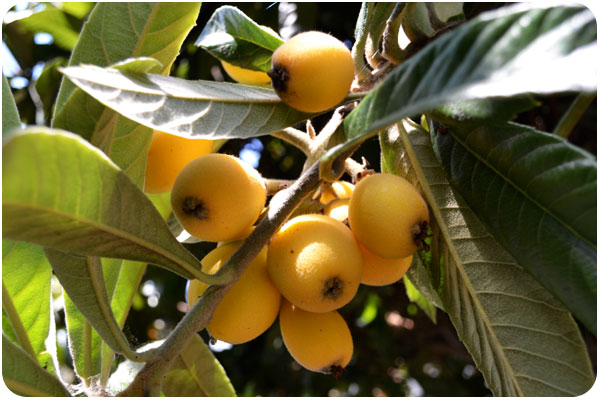
loquats in a cluster on the tree

when we first moved to our current place, none of my neighbors had plants outside, and all the landscaping was meticulously cut into round topiary shapes, so closely that flowering plants no longer flowered, and the 2 loquat trees bordering my patio no longer bore fruit. finally, one day, one of my neighbors said “um, hey, quit cutting the trees!” and after 3 years of rehabilitation, we have full loads of loquats ripening on 2 trees. this is going to easily double what we can eat off the land here in springtime.

picked loquats
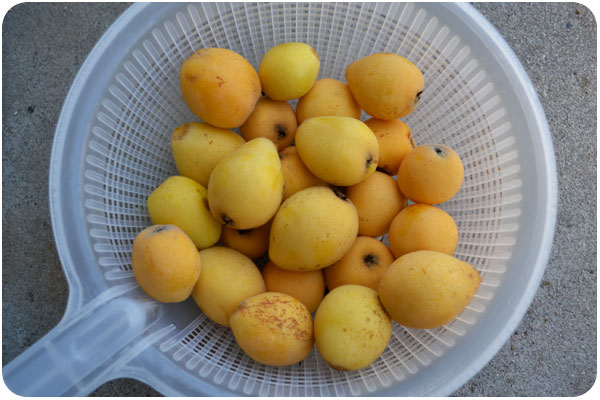
fresh-picked loquats

i grew up with a loquat tree, so i am totally thrilled about this. while i agree with most assertions that eating them fresh while standing in the yard is the best way to enjoy them, anyone who has these trees knows there’s only so much you can do of that, as the yield is too copious to keep up with. i’ve been looking for all the things i can do with them for LAist and came up with some pretty great projects, including loquat wine, loquat-infused brandy, and homemade italian loquat seed liquor. in the meantime, i just tried the very first firm fruits, and found they were already quite sweet, so i got to work picking what i could, and put up a jar in the freezer.

slicing loquats
slicing loquats lengthwise

to prepare loquats for use, start by slicing around the fruit lengthwise. i like to start at the flower-bud end, because it’s often hard to slice, but easier to cut out afterwards. roll your knife around the fruit, meeting the starting cut, and twist the 2 halves apart as you might with an apricot or peach.

halved loquat
a loquat, sliced around the seeds lengthwise

once halved, you can simply pinch the seed membrane in the empty half with your fingernails, and peel it out [this isn’t critical, as the membrane is both harmless and edible]. then pop out the seeds from the other half, peel out the other membrane and then chop as needed. there are all kinds of recipes asking for blanching and peeling, which i find entirely pointless. in general, i think peeling fruits and veggies when the peel is inconsequential to the texture is a total waste of time, and only contributes to food waste. and pettiness! there, i said it.

oh—and if you ever wondered what the relation is to kumquats? it’s in name only. they both have names deriving from their old cantonese names, so they sound the same while being totally unrelated. there ya go!

loquat ginger chutney

after researching a few chutnies, i altered a recipe i liked and will be making a good quantity of it for the next LA food swap, among other things. it’s delicious, with a satisfying ginger-mustard spice. then, it’s down to the home brew supply to see about this loquat wine idea.

Loquat Ginger Chutney
1 TB canola oil
1/2 tsp cumin
1 tsp mustard seeds
1 tsp curry powder
10 loquats, peeled, pitted, and roughly chopped
1/2 large onion, chopped
2 cloves garlic, minced
2 tbs fresh ginger root, minced
1 fresh serrano pepper, minced
1/2 cup apple cider vinegar
Salt to taste

Heat the oil in a saucepan, add the onion, and garlic and sauté until tender. Add the cumin, mustard, and curry powder, sauté another minute.

Add the loquats and toss to mix through, 1 minute. Add the vinegar, serrano pepper, ginger and salt, and simmer on medium heat about 30 minutes until reduced to a thick sauce.

Store in a jar in the refrigerator, or let cool for use in your next meal.

grilled marinated artichokes

trimming artichokes

this past sunday, i picked up a big bag of baby artichokes for marinating, and researching this week’s seasonal eats for LAist. my favorite seller for tender organically-grown baby artichokes, tutti frutti farms, has just started carrying them this past month. i was all set to do a traditional marinade when i read about grilled artichokes, and wondered, can’t we grill them first and then marinate them for a toasty, smoky flavor? why not!

when you prepare baby artichokes, nearly all recipes will require that you trim them. the photo above shows the 3 stages of trimming, where the 2 on the left are un-trimmed baby artichokes. first you pull out the tougher outer leaves, and finally trim the tops of the remaining leaves and shave down the stem into a cone, so as not to cut away much of the heart. as you work, drop the trimmed artichokes into acidulated water to prevent discoloration, which can be made by adding lemon juice or citric acid to a bowl of water.

artichoke leaves

while reading up on artichokes, i was interested to find that artichokes are the highest known anti-oxidant vegetable, and that many cultures have made parts of the plant into tea for liver health. sure enough, the leaves are a great source for tea-brewing, so i saved all my outer leaves in the trimming process, boiled up some water and steeped a whole pot of them. i can safely say i have more artichoke tea than i know what to do with, but it sweetens up nicely with a bit of honey, so i guess i’ll drink some every day.

grilling artichokes

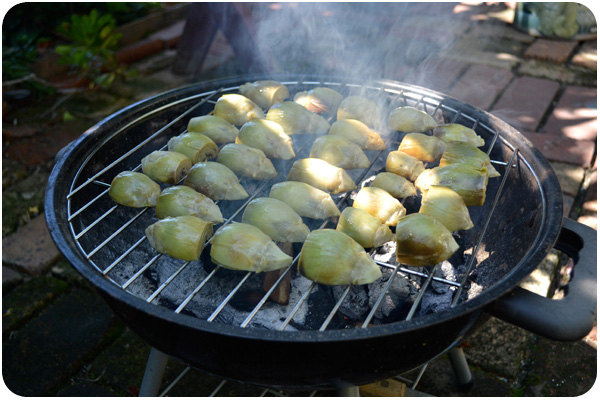
following the cue from another recipe, i cooked the chokes 8 minutes in boiling water, dunked into cold water, sliced in half lengthwise, drizzled with olive oil, and set over a heated grill sprinkled with mesquite chips. the pre-cooking helps infuse the flower heads with water, so they won’t char quickly, but watch them and check frequently, since they’re small. as they become toasty brown, turn over and grill the outer side.

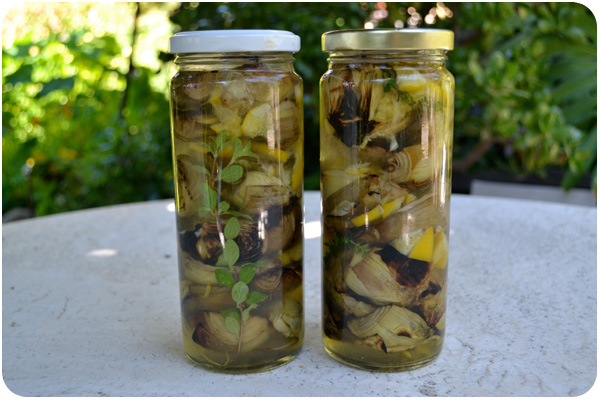
on the stove, boil 1 cup white wine or white balsamic vinegar, juice of 1 lemon, and 1 cup water in a saucepan. once the mix reaches a boil, drop in 20 peppercorns to steep. once the artichokes are grilled, you’re ready to pack them up. i chose to add 1 chopped preserved lemon for extra flavor, along with 2 sprigs marjoram and a few small sprigs thyme for each jar.

place some chopped preserved lemon in the bottom of each jar, and work in layers, adding 4 grilled artichoke halves, a sprig of thyme, and more preserved lemon until you’ve packed all the artichokes. halfway through, slide the sprigs of marjoram into the outer edge of the jars so they stand vertically as you pack the jars.

once you’ve packed all the grilled artichokes, pour equal amounts of the boiled mixture into each jar, topping off with water to cover. let jars come to room temperature, then store in the fridge.

marinated grilled artichokes

Marinated Grilled Artichokes
24 tender baby artichokes
juice of 2 lemons
1 cup white wine vinegar
1 minced preserved lemon, or zest of both fresh lemons
4 sprigs marjoram or oregano
6 small sprigs thyme
20 black peppercorns
olive oil & salt for cooking & packing

If you’re grilling with charcoal, start the coals and soak mesquite chips if you have them. If you’re cooking with gas, heat the grill a few minutes ahead of when the artichokes are done, below.

Trim the baby artichokes by pulling off tougher outer leaves, cutting off tops, and paring down stems to a point. As you work, drop each into a bowl of acidulated water to prevent discoloration, made by adding the juice of 1 lemon to the bowl.

Heat a pot of water to a boil and drop the artichokes in, cooking for 8 minutes, to saturate with water and soften. Remove from heat and return to acidulated water bath to cool down. Drain, cut the artichokes in half lengthwise, dump the acidulated water, return to the bowl and drizzle with olive oil for grilling.

If you’re using coal, sprinkle soaked mesquite chips over the hot coals just before grilling. Start by grilling the artichokes cut-side-down to cook the hearts through. Check frequently, and turn when they show a toasty-brown color. Grill the outsides to a toasty brown for color and flavor. As the artichokes cook, heat a saucepan with the juice of 1 lemon, vinegar and 1 cup of water. Add the peppercorns once it reaches a boil and turn off heat. Let the marinade steep as the artichokes finish grilling.

Clean 2 canning jars, and add a pinch of lemon zest & salt (or minced preserved lemon packed in salt) to the bottom. Layer in 4 artichoke halves with pinches of zest and salt with the occasional sprig of thyme and stack artichokes in the jars. Halfway up, wedge the marjoram or oregano along the side of the jar, so it may impart flavor to the stack. Continue layering until all the artichokes are packed. Pour the hot marinate liquid over the top, and top off with water if necessary. Store in the fridge until ready to use.

the first-ever LA food swap

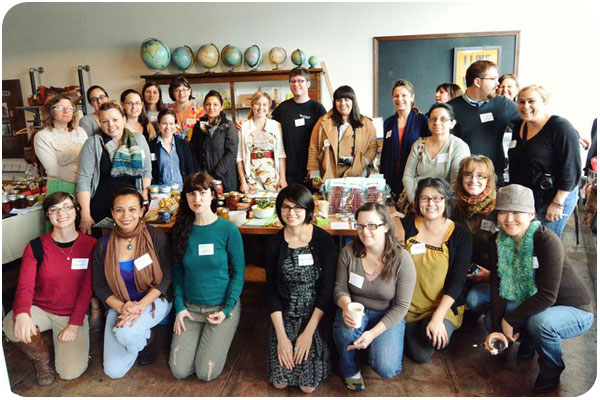
all the participants of the LA food swap
a reform school filled with avid food traders. image: gregory han

this past weekend, my friend, writer & sustainable food business strategist, emily ho organized the first LA food swap, calling for home-cooks, preservers and general diy-foodie-types to bring their artisanal wares to a small, informal food trading event. i have been wanting to do something like this for awhile, but never got to organizing, so i’m really glad she made it happen.

LA food swap
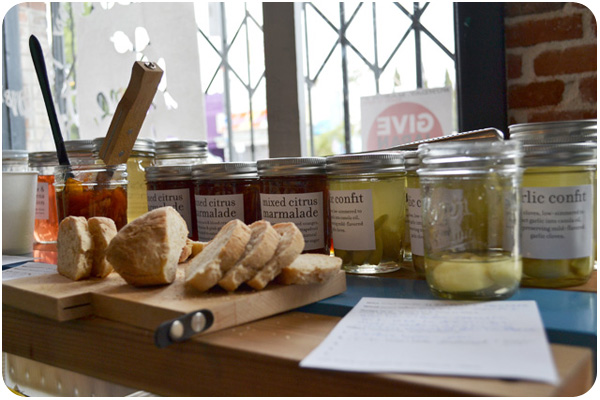
my offerings at the LA food swap: garlic confit, mixed citrus marmalade, dandelion vodka, blood orange / lemon verbena vodka

when i first heard about the event, i researched a few seasonal preparations and got to work on the ones that would need the most time, namely the vodka infusions. i took a long walk foraging hundreds of dandelions for a 3-week infusion that turned out quite nicely [though it was hard to tell along the way]. i had been curious about this slow-cooked marmalade, so i decided to modify it by using a mix of citrus: cara cara, navel and blood oranges, meyer lemons and pink grapefruit. finally, i made something i always have on standby, garlic confit.

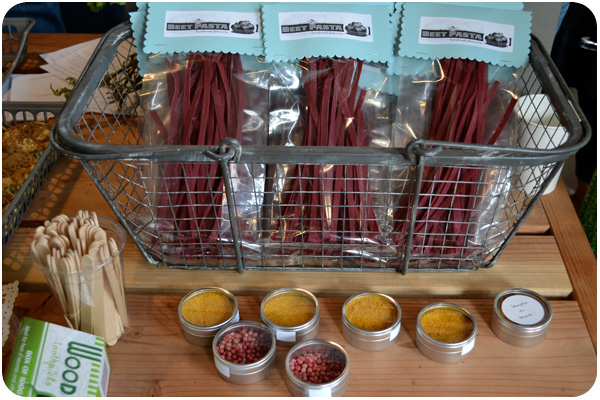
beet fettucini, satsuma mandarin powder & pink peppercorns
emily's beet fettucini, satsuma mandarin powder & pink peppercorns

emily made some deliciously deep red beet fettucini, an dried & ground mandarin zest seasoning, and foraged pink peppercorns. this is just one example of the great ideas you get at a food swap—of all the things i’ve been doing with citrus peels, drying & grinding them into powder hadn’t occurred to me [though i do stick the dried zest in a pepper mix and throw it in a mill]. wonderful!

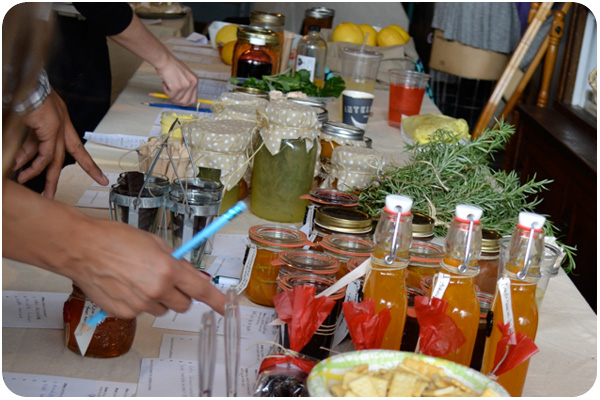
swap table
marmalades, chocolates, lemonades, arancelli, and extracts!

just a sample of what some of the many table and benches looked like. i was lucky enough to entice 2 food traders into awarding me with a bottle of that arancello, the rosemary lemonade concentrate, and yonder at the end of the table, some lemons & grapefruit.

the take from the LA food swap
a group shot of all my new friends

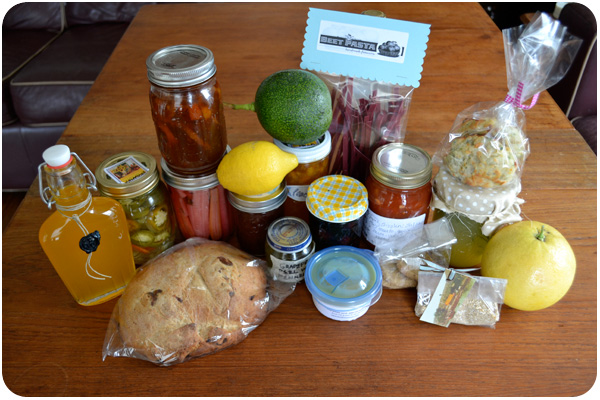
so, here’s what it comes down to. i arrived with 11 jars of confit, 12 jars of marmalade, 2 jars of blood orange / verbena vodka & 3 jars of dandelion vodka. i traded them for [left to right] a bottle of arancello, garlic bread, a jar of pickled carrots & jalapeños, rangpur lime marmalade, pickled multicolored heirloom carrots, 2 lemons, strawberry-grapefruit marmalade, 3 avocados, peach marmalade, a grapefruit / fennel tincture, a jar of cherries, lemon curd, beet fettucini, spicy salsa, brown butter cookies, lavendar oatmeal scrub, 4 cheese & artichoke biscuits, rosemary lemonade concentrate, and 3 oro blanco grapefruits. not included in this photo are a few arugula plants, quince, lemon rosemary cupcakes and a bowl of foraged herbs, basically the leftovers of what we had that we traded in order not to take our own items home.

beyond all this food stuff, i got to meet some really nice people who value food traditions and want to connect over it, which has been wonderful. everyone repeatedly asked when we’d be doing it again, and the tweets following the event were full of excitement about using new food items. to see more photos and get the official word, visit LA food swap & sign up for emails on the next swap. let’s keep this event full of great people, energy and ideas! in the meantime, enjoy their official write-up: our first food swap, or my own recap at LAist: an old-fashioned good time: the 1st ever LA food swap.

springtime foraging

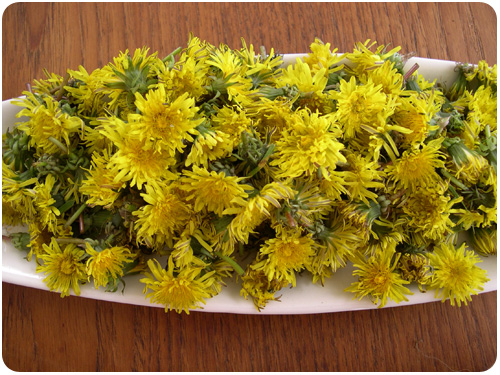
hundreds of dandelions
[hundreds of dandelions]

a couple weeks ago, i spent a warm pre-spring afternoon foraging for dandelions. i just heard that my friend, emily, had set up the first LA food swap and i immediately signed up, planning out a few seasonal food projects i could share and trade with others. a recipe for dandelion jelly i found last year made me think i should try some kind of dandelion infusion, so i set out with my scissors and a cloth bag and got to collecting.

once i got home, i cut the base of each flower off, and separated the petal cluster from the surrounding leaves, and dropped each into a jar. as i worked, i noticed that dandelions have a scent that somewhat resembles banana, which made me wonder just what flavors will bloom in this process.

it’s been about 2 of the 3 suggested weeks, and the flavor has developed, though i’m not sure what it’s developed into. it has a very interesting floral flavor, which has been aided in part by the addition of some honey. another week should do it, then i’ll thin it out with some soda and find out what we’re dealing with here.

some other infusions i’m experimenting with include blood orange, which is outstanding, and has the distinct flavor of blood oranges, rather than just a general orange flavor. i’m also working with lemon verbena, which has just grown several shocks of fresh leaves. this extraction is very flavorful and should make some fantastic cocktails. finally, i’ve had lemongrass infusing for 2 weeks, and while it finally has some color, i’m not sure the flavor is anywhere near what i’d expect of lemongrass. perhaps this would be better as a simple syrup. i’ll give it another week, but i’m not sure alcoholic infusion is its best use.

my confirmed contributions to the LA food swap is a chunky, slow-cooked, mixed citrus marmalade [including navel, cara cara and blood oranges, meyer lemons and pink grapefruit], and garlic confit [slow simmered garlic cloves in canola oil for all kinds of savory uses]. if the dandelion liqueur works out, i’ll bring some bottles to trade, or make a mix of the well-matched successful infusions. and if i think of something else to make, i’ll try it out, but so far that’s all i’ve got.

enjoying persimmons

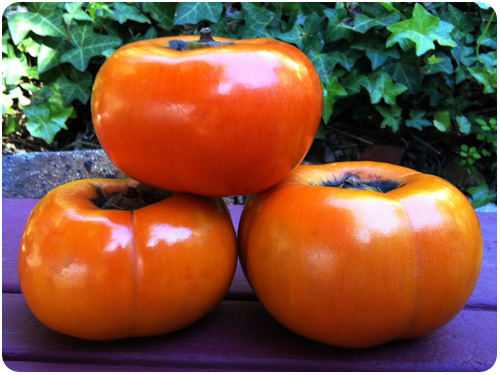
persimmons

my friend ryan brought some fuyu persimmons to share at horn-o-plenty and, as usual, once the night was over, most people were too shy to claim them. persimmons tend to be the passed-over cousin of more popular fall fruits like apples, pears and pomegranates, which is sad, because they’re delicious! i have an unfair bias though, we had a tree in yard where i grew up, so we ate them every year.

if you’re timid about persimmons, here are some words of encouragement: just one has half the us rda of vitamin a, they’re a great source of vitamin c and dietary fiber, and their texture and sweetness allows you to use them like a mango, without all the pesky strings.

after shopping through some recipies, i decided to modify an ice cream idea into a persimmon dessert.

spiced persimmon ice cream

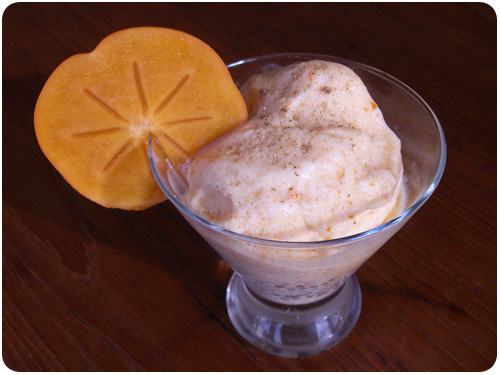
spiced persimmon ice cream

ingredients
2 cups whole or 2% milk, chilled
2 fuyu persimmons, chopped
2 tbs raw wildflower honey
1/4 tsp ground cardamom
1/4 tsp ground anise
1 small pinch nutmeg

instructions
if your ice cream maker has components that need to freeze ahead, make sure they’re frozen and ready to go.

add all ingredients to your blender and puree until mostly uniform [find the delight in particulates, they add character]. taste to make sure you like the sweetness and modify if you wish.

pour blender contents into your ice cream maker and run it until the mixture reaches a thick slush consistency. spoon into a container and store in the freezer.

to serve, spoon into dessert cups and garnish with a persimmon wedge. or dust the top with ground cardamom. or add ground pistachios or pine nuts—go to town, garnishing is all you, baby!

more fun with persimmons

from epicurious:
persimmon salsa
persimmon cranberry sauce
fuyu persimmon relish
fuyu persimmon and avocado salad
prosciutto with persimmon pomegranate and arugula
lemon-glazed persimmon bars

from thekitchn.com
persimmon salad with ginger, mint and yogurt
persimmon tart
dried persimmon rounds with cinnamon

from wasabi prime
persimmon & rosemary tart with a persimmon & rosemary bellini