event calendar: june 21 – 27, 2010

it’s the summer solstice today! happy longest day of the year!

here’s what i’ll be doing

tuesday, june 22, 7:30am LA area chamber referral breakfast checking in with my LA area chamber network. FREE to chamber members or free as a guest of a member.

wednesday, june 23, 7:30-9pm 3×3: the long strange journey of a graphic design career featuring sean adams, tom devine and terry lee stone at art center.

other events for this week

saturday, june 26, 7-10pm deLab’s city listening II: stories about los angeles Join design east of La Brea for an evening of free expression and generous libation in celebration of LA’s design culture at large.

HOW conference 2010, day 3

big blue bear, convention center, denver, colorado
[photo: ©larsonmirek on flickr]

[recap day 1 and day 2 of the HOW conference]

we’re in the home stretch! at this point i was really exhausted—but it’s back to the convention center for the final wrap up on HOW 2010!

designing the future, dodging the vectors

i’m always interested in what the aiga is up to, and wanted to hear what richard grefé would talk about as their new direction. i have to admit, this presentation went by too quickly for me to keep up with the notes, but grefé talked about how design has changed from simply executing on creative direction, to strategic thinking. his idea of dodging the vectors is about the fact that traditions in design practices have become the vectors we most often follow, and it’s time to divert from those in order to evolve the industry, both in practicing differently and teaching it differently. we start as makers of artifacts, and evolve into designers of higher concepts and more interdisciplinary hybrid intangibles. similarly, the global landscape has changed, and since american culture is received less openly, we have to change how we appeal to the rest of the world. aiga will adapt to these changes by investing in the new generation of designers, meeting people where they are, recognizing that social responsibility counts and that institutional authority is no longer valid. interesting points, i’m going to have to download his presentation to recreate the full picture. i couldn’t write fast enough!

rediscovering play: bringing fun and passion to your work…and life

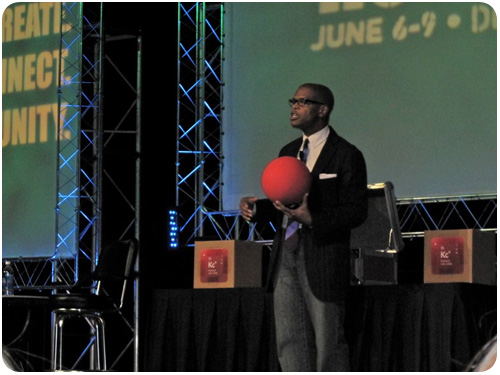
kevin carroll, closing keynote at HOW 2010
[photo: ©larsonmirek on flickr]

kevin carroll was a very inspiring closing keynote for the conference. while he talked about play as a universally important aspect of human culture, my takeaway was that he connected with something he felt passionately about and made it his life’s work, working with ann willoughby to make his ideas accessible in a few forms of media. but above all, his message was to find play and connect with our need to play as an uplifting social exercise. i really enjoyed his style.

wrap-up

overall i really enjoyed my first HOW conference. there were so many amazing people here with so much to share, even advice that may have seemed obvious was re-framed in new contexts as food for thought. there was so much good programming that it was hard to narrow the choices down for concurrent sessions.

that said, i do have a few critiques
first, a lot of the sessions were named something a bit misleading. the session titled killer copy was not about crafting killer copy, it was about creating clear content. three word taglines was not about branding practices so much as changing process and approach. i started to wonder how many other sessions i passed over due to the title [and description] that would have been interesting to me. second, a lot of these presentations are too portfolio showcase-heavy. i remember a time when i might have been more curious what artifacts these designers were producing, but currently i’m a lot more interested in their process and style than having half [or sometimes all] of a presentation be a portfolio show. this is probably due to how online portfolios have become so available remotely, but what i want to see & hear these days is more about how you think rather than what you made. third, the exhibition floor should be open a little more often. it seemed like it was only open during the breaks, and i get that, but a conference like this is so back-to-back that we need lunch breaks outside. the only time the floor was open was when it was flooded with people, and as such, i never got a chance to walk & talk with vendors. they paid for those booths, give them some quality time with attendees, not just a swag-fest.

getting respect is a 2-way street
another thing i noticed in a big way due to the nature of CFC and HOW happening back to back is the difference of the attitude toward design between business owners & independent professionals like myself and in-house designers. in both arenas there is a lot of talk about how to communicate the value of design, how to convince our clients and bosses that design is a priority not to be overlooked. at CFC we talk about strategic thinking v. simple execution on directives. we talk about knowing the value of what we produce, creating a fantastic experience for our clients, and charging accordingly. and we talk to each other about how we plan to do this, things we have done that work, evidence that we have converted clients to believers because they see the return on their investments. this was also discussed at HOW, but when i’d talk to attendees, i also heard in-house designers talking about working on the side for rates that could never support an independent practice, doing branding work on an hourly rate with no value add commensurate to the service, or working to justify the value of design to the higher-ups and then turning around to pressure their contract designer to do extra work for free. when david berman challenged designers to do 5 hours of work per week for a cause, i heard grumbling along the lines of …but how do you pay the bills? when i related some of brian dougherty’s sustainable best practices to someone i met, the response was but how do you get clients to pay for it? this was disheartening, but it’s no surprise to me that getting respect in this industry is so hard when so many people are willing to sell it out in one way or another, or come to the most simple, somewhat-cop-out answer. there’s an inherent flaw in trying to sell your clients and bosses on the value of ideas if you’re selling logos on the side at production rates. to be valued in the way we say we’d like to be at these conferences, we all have to bring professionalism and respect to everything we do, in all areas of our practice. we all have to live this message more so we can talk about it less.

HOW conference 2010, day 2

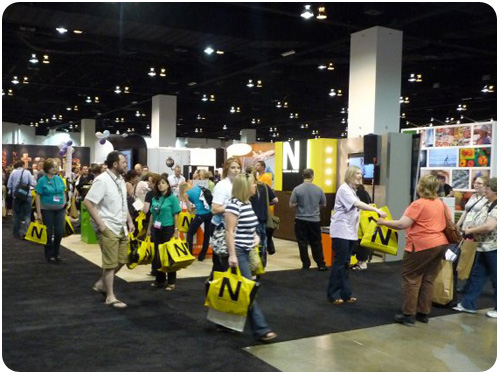
HOW conference 2010 exhibition floor
[photo: http://www.neenahpaperblog.com]

[recap day 1 of the HOW conference here]

how can we use design to influence positive change?

this breakfast with kit hinrichs was a late addition of interest to me. hinrichs started off by showing some of his work relevant to the topic, and then introduced his senior designer, maurice woods, to present on his labor of love the inneract project, where he offers free design classes to creative kids and teaches the concepts of creative problem solving. woods shared some pretty outstanding work from this program, which grew from a few interested students to a thriving classroom of engaged kids, bringing design to their personal passions. this program has a host of sponsors, including sappi paper, who handed out a cool booklet on creating positive change afterwards.

visual storytelling: resonate and activate audiences

i was interested this presentation by nancy duarte since i’m considering doing some speaking in the future. her talk was hands-down rockin’—and it should be, because she’s been in the business more than 20 years. too many presentations are about the presenter and not about helping the audience. duarte talked about deciding who your audience is when they walk in, and who you want them to be when they walk out. creating a presentation without an audience in mind is like writing a love letter that starts ‘to whom it may concern.’ duarte talked about contrasting between what is and what could be, take your audience back and forth between the two, using storytelling to talk about transformation. she had a fascinating way of telling her own story to illustrate this, starting out as a slide design company, moving through the transformation to powerpoint, and facing competition from abroad in a global marketplace, she had to transform her own business to remain competitive. she also talked about mapping out some of the most famous and poignant speeches in history, and formulating her own for presentations that have the most impact. using contrast as a structure, add a veil of emotional appeal in each transition to connect the audience to the story. use different media and try to illustrate points a few different ways. every presentation needs a star minute that everyone will remember. finally, deliver profound experiences, be the authentic you.

evolve: the future of sustainable design

this presentation by brian dougherty was just what i was looking for: something that goes beyond using recyclable paper. dougherty described that as the formative years of green design, and said he wanted to push it further: there must be better options than green & leaves or sustainability as a movement will hit a dead end. over time, green design has become about designing for outcomes. if you look at green design as a vehicle for changing behavior, design for change is your job. in order to do this, we need to make green design accessible, consider it part of a whole system that uses best practices, and give tools that enable the right actions. dougherty talked about his concept of designing backwards, considering the final resting place of the piece before creating it. if we don’t want it in the trash, we must design it to be used or recycled; if we want it recycled we must make it easy to de-ink; if we want to waste less, consider a package that uses as much of the sheet as possible to avoid throwing out unused materials. take these concepts up the chain, talk to vendors, find out about materials and processes and think about how best to use them.

three. word. taglines. [and other horrible branding practices]

tate linded at HOW 2010
[photo: http://www.neenahpaperblog.com]

as a branding specialist, i was curious about what tate linden had to say about branding practices. he ended up talking less about the practices themselves and more about developing a process that breaks out of “the written rules” of how traditional business has been done, and gave examples of how he wrote his own. the client is best qualified to open up insight into what they think their brand means. it’s up to you to add value. some of his practices include exploring all avenues before choosing one [rather than downplaying the alternatives to the client or allowing consensus to water-down concepts], always working directly with the decision-maker on every project, and knowing your target and going after their motives. some of the brand practices he cautioned us to avoid: company names that are acronyms, three word taglines that aren’t a call to action.

neenah white party

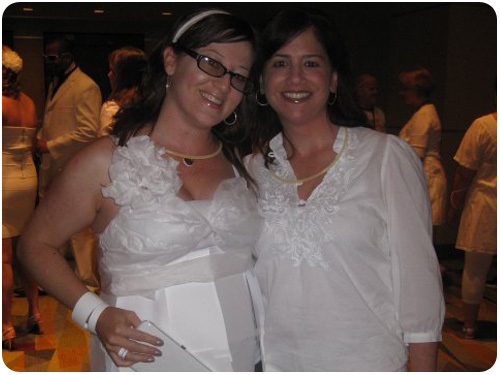
heather parlato & beth goldfarb at the neenah white party
[photo: neenah paper]

after all that action was over, we had a break for a couple hours before the white party. we took our time having dinner and then dressed up in our white outfits. i assembled a paper dress of tissue and outdated paper swatch books, because “it seemed like a good idea at the time” and “i am nuts.” beth made that awesome tissue flower for me, it really ties the whole ensemble together!

[continue with day 3 of the HOW conference here]

HOW conference 2010, day 1

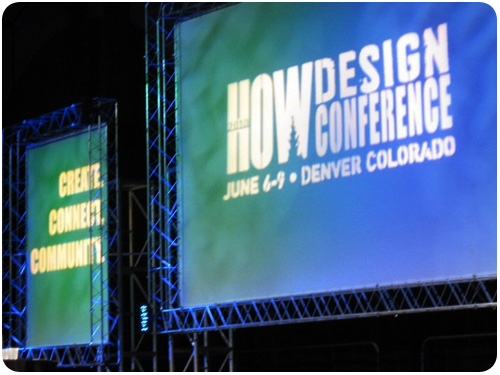
how conference 2010 backdrop
[photo: ©larsonmirek on flickr]

from one conference to another, we jumped right into the HOW conference on monday morning. my conference buddy, beth goldfarb, and i had matching agendas for today, so we got our breakfasts and jumped in.

design and social responsibility

david berman gave a really inspiring presentation on how design can change the world if we start asking what can we do with design, where will we have the greatest impact? he showed several examples of design solutions to seemingly non-design problems where a strategic system + clear information becomes a network for people in need and changes lives. examples: mpedigree.org, innocentive.com and kiva.org. if we had the innovation that created facebook dedicated to good causes, we could change the world. indeed! berman also talked about some of the failures of bad design and how it’s altered the course of history: the palm beach ballot fiasco, how traffic lights could be redesigned for the color blind and how colalife.org is using the space between soda bottles to ship essentials to third world countries. i have seen this theme since the beginning of my involvement in aiga, and am glad to see people are still talking about it, because the movement toward better practices has been a slow one. we helped create consumerism, so we can help move away from it. berman challenged the audience to dedicate 5 hours of their work week to design for worthwhile causes. hopefully those who were moved by this will find a way to make it happen.

a perfect marriage: great design and killer copy

the most effective design i see appeals to me because of how the design and copy interact cleverly, so i was sold on attending this presentation by erin anderson of braintraffic.com. she opened with a common scenario we’ve seen too often: where design of a site and content for it have been developed separately and then pieced together as 11th hour content, which is always less effective than a site that has been developed with design & content hand in hand. web users read 20-28% of the words presented on a web page. don’t fight this fact, plan for it. think about your target audience, their lifestyles and how they interact with information. prioritize content by what you want users to do when they visit, and don’t bury these items with less relevant content. plan content so users see themselves in it. don’t forget about mobile users, low visibility & literacy users, and international users, who may be using a different interface, or may not be able to read the content you’re presenting. in short, for the best outcome, involve your writer early, have them come to all the meetings, involve them in brand objectives and create an editorial style guide so all future content stays on message and within style guidelines. plan an editorial calendar for refreshed content at regular intervals, and do periodic content audits to make sure everything on the site is still relevant. she also gave a run down of best practices writing tips to keep in mind when creating your own content.

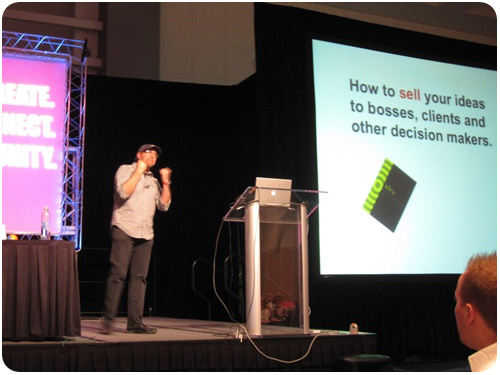
how to sell your ideas to bosses, clients, and other decision makers

sam harrisson at the how design conference
[photo: ©larsonmirek on flickr]

sam harrison presented how to sell ideas, kicking it off with a funny selection of negative client feedback. often our reaction is to think ‘they just don’t get it’ but this is a dangerous victim mentality. i liked how harrison isolated every aspect of a selling situation and gave examples of best cases and how plan for them. involve clients from the beginning so they are invested in the concept long before the final pitch. know your buyers and how close to buying they are in the spectrum between awareness and action. ask open-ended, simple, and follow up questions, and always add what else should i have asked you? and listen to what might be the most important thing they tell you. every presentation is a performance. they have certain expectations of you, and it’s on you to rise to them. be the best possible version of yourself when you present. get to know the room, practice your delivery, ask for a stress-free time in your client’s schedule, and don’t distract them with hand-outs. then harrison gave his 5 secrets for putting together a good presentation: have 1 theme, open with a strong start using a story, question, fact or quote, use simple language with memorable quotes peppered in, be visual with your words, and add drama using a prop or visual demonstration that makes your point. go in passionately and the client will pick it up. give your ideas the energy they deserve!

make stuff

mike perry presented on his extensive work outside the strictly commercial, showing illustrations, collaborations, zines and sculptures. his approach to work has turned more into taking commercial work in order to fund an art career where he can explore his own themes and ideas. his work is hard to describe, but take a spin through his site and watch some of the video tours and you’ll get the idea.

folded inspiration

kit hinrichs and trish witkowski showed folding techniques from the conventional to the totally awesome, presented by sappi paper. hinrichs showed a selection of his own work, and then witkowski talked about how she got interested in folding, which led her to get a ph.d on the subject. she also presented all kinds of complicated folds—all with the kind suggestion to please talk to your printer and binder through the entire process to insure success. these were really awesome ideas in the area of paper technology, and the presentation came with a book full of diagrams and samples. total paper fetish love!

since this was the only night without a party scheduled, i took it off & went home after dinner. saving my energy for the next 2 days!

[continue with day 2 of the HOW conference here]

creative freelancer conference 2010, day 2

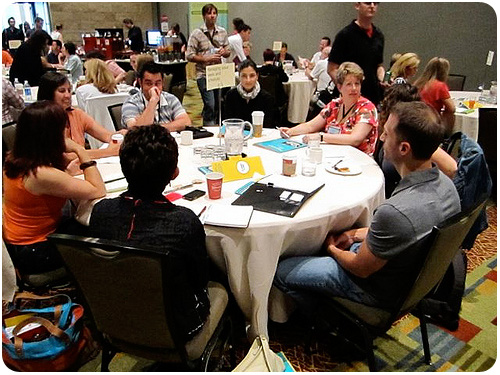
breakfast roundtables at the creative freelancer conference 2010 in denver, colorado
[photo: dyana valentine]

[recap day 1 of the creative freelancer conference here]

the 2nd day of the 2010 creative freelancer conference was a whirlwind of activity. i was dead-set on getting to peleg top’s roundtable breakfast for my peleg pep talk on client relationships, which i have been needing for months now!

how to make clients love you

peleg top is an outstanding business coach for creatives. i’ve taken a few of his workshops before, and always leave feeling empowered by his advice and perspective on approach to client relationships. in this breakfast he started by asking us to think about who we are ideal clients for and why we give loyal repeat business to our favorite companies. we settled on the fact that ultimately it’s how our favorite service providers make us feel after working with them or buying from them, we sell experience as much as we sell our actual services. if you can give clients a service that make them feel relief, confidence and empowerment, they will become loyal patrons of your services.

we looked at apple as an example, since we are all loyal patrons, and agreed on things that make us feel good about buying their products. they serve us well, because we are their target market, they think about our lifestyles and design for solving our problems. they deliver quality, and it’s not cheap, but we pay for it because we know it’s a better product that improves our quality of life. research your clients and their lifestyles, ask them what they need in their professional lives, involve yourself in their industries so you can understand how to solve their problems and help improve their experiences.

it’s your money, so take it personally

galia gichon gave a great talk on getting organized and proactive about your business finances. i am typically pretty organized, but she had some great advice that reminded me of some areas where i could improve. overall, i liked her style of advice, which was to stop avoiding it, stop thinking you can’t do anything just because you don’t have all the money you want right now. start small, organize, analyze your own finances, consolidate loans and investments, and plan one day a week where you check in and make adjustments. ask yourself where you’d like to be in 3 months, a nice, short window to work with, and give yourself a dollar-oriented goal. finally, connect with what you’re good at, and give yourself a positive affirmation about your money habits to feel good about.

freelancer’s legal basics: contracts & copyrights

jean perwin‘s presentation on contracts & copyright was a good kick in the pants for anyone who isn’t using a contract and isn’t charging for the true value of usage rights to their work. i still hear of so many designers who shy away from legal agreements, but her main point was: it’s just business. always use a contract, never assume your client understands your business agreement. it’s okay to over-communicate to prevent misunderstandings, be very clear about what service you are providing, what you are selling, and what you are not selling. she went through a solid list of what should appear in a contract, as well as the 5 levels of usage rights: reproduction, derivative work, display rights, distribution rights, and performance rights. every right you release has individual value and should have a price: charge accordingly. perwin was extremely knowledgeable about the design industry and copyright law, i loved her presentation.

the art and science of pricing a project

i read shel perkinstalent is not enough a few years back and found it to be a great resource on the business side of running a design practice. for his presentation, he went through all the factors that go into figuring out your options as an independent creative professional, how to calculate your overhead and operating costs, and how those figures affect the pricing you work out for each project you bid on. according to perkins, the process is mostly science, with a bit of art thrown in at the end. he also went through a must-have list of items that should appear in a proposal, along with some optional add-ins, and how to best present them. the advice i liked best was about writing your cover letter last, when you have worked out the entire scope of the project and are excited to get to work.

your internet marketing toolkit: find and use tools that are right for you

aliza sherman is a veteran social media marketing specialist, and gave a presentation on how to find the tools that work best for your online social networking style. your main objective is to build your brand and increase your reach with your market, so choose networks where your clients hang out, that have an interface you like working with. be clear about what you offer, provide strategic contact points regularly, so the people who want to work with you can find you. pick one of each in the social toolkit triad and them out: a social portfolio, a social network, and a blog or microblog, and post in them at regular intervals you know you can maintain. then, just keep being yourself!

success profile, cause farm creative
beth goldfarb of cause farm creative
[photo: dyana valentine]

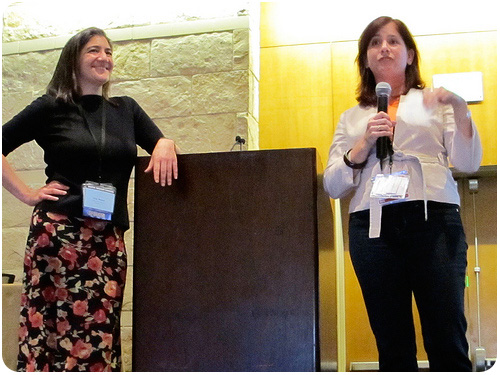
between sessions, the creative freelancer conference staff had picks of creative business success stories they wanted to share with the group. they asked my colleague & conference travel buddy, beth goldfarb, to share her new business launch of cause farm creative with the conference, as well as tell a little bit about how she came to this decision after working with her business mentor, peleg top. i’m really proud of her and think her new brand looks fantastic.

prioritizing, deciding and doing: your hands-on guide to making the best decisions

samantha bennett gave a really enjoyable presentation about how to help yourself decide what to do, lest you fall into the perils of procrastination. i really liked her system, because it’s a balance of being proactive, but also asking yourself what you really want to do, as opposed to just throwing a daunting list of things at yourself and then scolding yourself when you don’t do it all, or getting bogged down with shadow goals that aren’t actual priorities. she showed us how to make lists of everything we need to do, prioritize them based on how we’ll feel when they’re done, decide what’s important, and then get to work. one of my favorite tips from her talk was about taking 15 minutes every day before checking email to write about personal values, motivations & reasons for why we do what we do. it’s a great way to center your mind and stay focused on what matters.

wind up

this year’s conference was at a really great time for me. i was starting to open up a lot of questions about myself and how i run my business, which can be a lonely and confusing place without guidance. i held off any major decisions, and i’m so glad i let all these fantastic people in and all the helpful things they had to share. i’m leaving it feeling happy, empowered and renewed. it was also fantastic to see the physical manifestation of so many friends i made last year [we keep in touch online, but face time rocks]. with them as my main CFC network, i met a lot of new smiling faces too. i’m looking forward to getting to know all of you better in our social networks, and checking in again next year! thank you, marketing mentor and HOW for another great year!

creative freelancer conference 2010, day 1


ode to the entrepreneur, samantha bennett

it’s finally here, the creative freelancer conference for 2010! i got into denver yesterday all ready to take on the double header [CFC is closely followed by the how design conference]. the conference kicked off today at 2pm, here’s my run-down of the day’s events:

you are a business!

the opening keynote was given by ilise benun of marketing mentor: you are a business! she gave a humorous recap of how she got to be in business for herself, and talked about the various descriptions we give ourselves, as well as the different stages of success we feel we have to enjoy before we truly take our businesses seriously. these examples started off appealing to our less-business-minded sides, the ones who sometimes deny ourselves the titles we deserve, but she progressed toward some more empowering ideas many of us could identify with. one thing she said that i liked was “there’s no such thing as a business person, only business tasks.”

pitch perfect

the first session was dyana valentine‘s pitch perfect. i will admit, i’ve participated in this process in a few different incarnations, and as its developed over time, it’s become better with every revision. valentine now has this pitch brainstorming & refining exercise down to a guided worksheet, where you’re thinking about the kind of work you do best [or want to do], the clients you most want to work with, what your secret weapon is, and what clients have said when you do your best work with them. taking all these ideas, you get into the essence of what you do best and how to communicate it clearly in an elevator pitch that people outside your field can understand. really great session!

who’s the boss?

the next session was who’s the boss: managing clients and their expectations with luke mysse. i really liked this session, and not only because it echoes ideas i’ve heard by my very favorite mentors. mysse talked about moving past being a creative and becoming a business that sells creative services [again with the advice to stop denying you’re a business]. he told an honest story of the evolution of his career and shared some of his most valuable takeaways, like getting to know yourself, defining your boundaries and policies [and sticking to them], marketing yourself confidently to get the right clients for your business, keeping open communication and ultimately knowing when to move on. my favorite advice was his suggestion to offer a monthly marketing meeting with your ongoing clients, to stay engaged with their plans, offer help and solutions, and help advise them on the best moves from a marketing and design standpoint. i really like this idea, it’s so closely integrated with what i already do that it makes sense to help clients plan out their year from the beginning.

freelance success panel

steve gordon jr. at the creative freelancer conference 2010 in denver, colorado
[photo: dyana valentine]

the day wrapped up with the freelance success panel, featuring steve gordon jr., alisa bonsignore, and laura foley during which we got to hear from 3 really different professionals on their goals, how they run their businesses, and how they got to where they are today. we then got to unwind and network at a well-deserved happy hour.

i have been so happy to reconnect with so many people i met last year, catch up with where they’re at, and meet many of the new attendees. another big message of this conference is “you are not alone!” and though it may feel that way sometimes, it’s really nice to be able to tell colleagues that i love their newsletters, or that i saw some of their work in a store or online, or that they wrote a great article—or to hear compliments that they’ve been seeing & liking what i’m doing too. we’ve built this great life, going out on our own and getting to work, it’s been good to take time out, meet up and appreciate the progress.

but before any more of that happens, it’s time for bed so i can wake up early and tackle those breakfast roundtables! more tomorrow!

[continue with day 2 of the creative freelancer conference here!]

event calendar: may 10 – 16, 2010

it’s a mad dash of deadlines this week as i prepare for my creative retreat next week, during which the studio will be closed. i’ve still got some fun networking goings-on, if you’re on the west side of LA, come by my biznik mixer, co-hosted with colleen wainwright.

here’s what i’ll be doing

tuesday, may 11, 7:30-9am the LA area chamber referral network. my bimonthly breakfast to connect with my fellow chamber members is FREE to chamber members, but you can drop in as my guest if you’d like to check it out.

wednesday, may 12, 5:30-8pm LA’s longest running biznik mixer at jerry’s famous deli in the marina! FREE to biznik members, join biznik to promote your business and then rsvp to our super-fun mixer and come say hello!

event calendar: may 3 – 9, 2010

i liked last week’s business development effort so much, i’m doing it all again this week. so it’s business development and work, but don’t forget to join in on my mixer if you’re in pasadena or thereabouts!

here’s what i’ll be doing

tuesday, may 4, 5:30-8pm the LA eastside mixed-up mixer at bodega wine bar in pasadena, hosted by ME and FREE to the public! join biznik.com, rsvp for this event and come meet other small business owners and indie professionals around the east side of LA.

may 7-9 48-hour magazine. look at this crazy idea. a magazine & web site that are created from start to finish in 48 hours. i signed up to find out the theme and see what i can contribute. curious!

other events for this week

friday, may 7, 6-9pm otis college of art and design, communication arts 2010 senior show is FREE and open to the public on friends and family night.

sunday, may 9 is mother’s day! have a great sunday with your mom-like people.

event calendar: april 26 – may 2, 2010

here’s what i’ll be doing

tuesday, april 27, 7:30-9am the LA area chamber referral breakfast, FREE to LA area chamber members. strengthen your network and meet other businesses from around LA. if you’d like to check it out, let me know and you can be my guest.

thursday, april 29, 10am PST seth godin talks with penelope trunk of brazen careerist, FREE with your brazen careerist membership [also free]. i’m always curious what seth has to say, and i keep missing these webcasts because they’re live. i’m going to make sure to catch this one!

thursday, april 29, 7:30-10pm eats & geeks: tapas, wine & chocolate. Founded by Claudia Yuskoff, EATS & GEEKS is for like minded creative professionals to take a break from the digital grind and gather for an exquisite meal prepared by members. join the facebook group and meet up with us!

other events for this week

monday, april 26, 7:30-9pm yo at the santa monica apple store. FREE! Join Yo Santosa for a show and tell at the Third Street Promenade Apple Store. She’ll share her experiences in the print, branding and motion worlds; her work has run the gamut from Pinkberry branding to such television and feature main titles like Desperate Housewives and 300. Ooh la la.

thursday, april 29, 6-9pm the art of connecting: drawing others to you FREE. A presentation by DR. BILL SALEEBEY author of Connecting Beyond the Name Tag, will discuss the importance of setting and timing in networking and how we can bridge different worlds.

saturday, may 1, 1-5pm 7th annual portfolio review & job fair discounted to AIGA student & professional members.