article of the week

take time to celebrate and dream by justin ahrens for HOW’s parse blog.

i saved this article earlier this week because it looked interesting, but i hadn’t read it until this morning. what a nice surprise to see another voice on the importance of the year-end retreat. i got to see ahrens speak with von glitschka on how africa changed everything at adobe max this year and his approach and philosophy were really inspirational. he suggests some things i hadn’t though of—bringing your design work to review and analyzing clients. good thing my getaway isn’t for another week, i can add these steps into my own process as well.

how to plan your year-end retreat

parlato design studio year-end retreat

whether you’re a small business owner or part of an in-house team, taking time at the end of the year to step back and reflect is an important part of maintaining healthy progress. i plan one every year, and i always surprised by what comes out of it.

i planned my first retreat somewhat by accident: i had a good amount of downtime in my first year of business, and i’d been trying to find an excuse to visit this boutique hotel i found in desert hot springs, hope springs resort. to me, it was the perfect picture of relaxation, and once i got there i found out i was right!

that first year i was mostly looking forward and taking a break, but as i built my business up, the next year i actually had some news to report. in the year that followed, i’d taken the initiative to branch out in a few directions, so listing new adventures and possibilities was kind of mind-blowing. this year topped that one by far, so i’m really excited to write it all out and look at everything on paper.

if you’re part of a group, taking time together outside the office in a neutral space is a great way to connect with the people you work with on a different level. allow everyone to contribute, compliment each person’s great moments of the year, ask them what inspires them, what would they do if they could make the rules? your co-workers and employees know their jobs best, and sometimes their unique perspective can inform a direction you wouldn’t have thought of without input.

how to plan your retreat:

first, stop waiting for some “free time” to open up. pick the least likely busy time months in advance, before any other conflicting events will allow you to change your mind. block it out and commit to it! even if you can’t spare more than 1 day, get away from your office or workplace so you can think clearly.

second, research your ideal setting. treat it like a vacation for your mind, a place with inspiring surroundings that also offer quiet for reflection. look for your favorite natural setting, maybe mountains, beaches, countrysides, or cool winter deserts landscapes with quaint small town B&B’s within driving distance? these are the places you’re looking for. you can actually do this step first, and eliminate the time between making the commitment and booking the reservation, so you’re locked in before you have a chance to second-guess.

third, book it! make apologies for your absence by beaming “i’m sorry, I’ll be away for my annual year-end retreat!” feel good about your decision! in addition to your favorite travel accessories, add your favorite pens and a blank notebook, and when the big day rolls around, away you go!

if your business has a few employees or you’re part of a department, you can plan a group retreat as well. if you can’t get out of town, at least get out of the office! back when i worked at natpe, our department head, beth, planned a creative brainstorming day at the getty. we left the office, took the morning to look at art, change our mindset and get inspired, and then we picked a spot among the sculptures to get our brainstorming on.

how i structure my retreats:

i leave early so i can enjoy my wind-down day, which is what I do on day 1. unwind! on day 2, i get up and enjoy breakfast, followed by some light exercise to get the blood flowing, maybe a walk or a swim or some yoga.

to get started, i review last year’s notes and analyze how everything played out. then, i sit down with my notebook and bullet out every new thing i did in the past year that i hadn’t done before. i like to make note of compound progresses, things i built on from something i did previously. we often think we’re aware of everything we’ve done, but i am always surprised by how much more i remember in this process. i get all kinds of ideas for the future at this stage, and note them for brainstorming later.

i buffer my reflection on the past with a break of physical activity or even a night’s sleep before i work on the future, giving my brain time to digest everything. when i’m ready, i look at my list of accomplishments and think of ways to build on them. free-association, daydreaming and hair-brained scheming comes in handy here! this is where letting curiosity and wonderment can help you strive for that next level you would normally think impossible or out-of-reach. once i’m done, i like to break these into easy actions, goals to strive for, and big ideas i can contribute to in the long term.

all of this helps me get my priorities in order and approach the new year with confidence. when i get home, i can tackle those easy actions, and i’m energized to break out the baby steps toward my new goals. with all of that organized, the long range plans get their periodic attention too. how about you, anyone planning a year-end retreat for 2010?

creative inspiration

Thanks Getting: how to ask for a testimonial from Dyana Valentine on Vimeo. one of the great things that can happen during co-working: one person asks a question, another person has a great idea for an answer, and a third person [me] is there to hold the camera! read dyana’s entire post, thanks-getting, for creativefreelancerblog.com!

typography

designworklife gift guide
[image: designworklife.com]
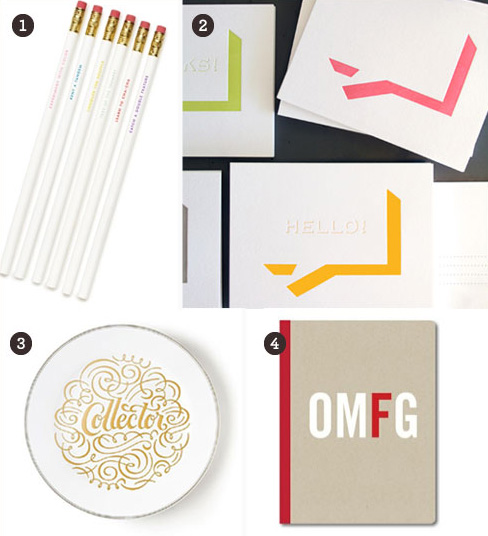
this is a little bit typography & a little bit holiday. designworklife.com is working out gift guides for 2010, and i really loved this typography-themed selection, including yarn-wrapped letters, the OMFG journal, a very affordable letterpress print, and even a letterpress t-shirt.

diy

book wreath
[image: living with lindsay]
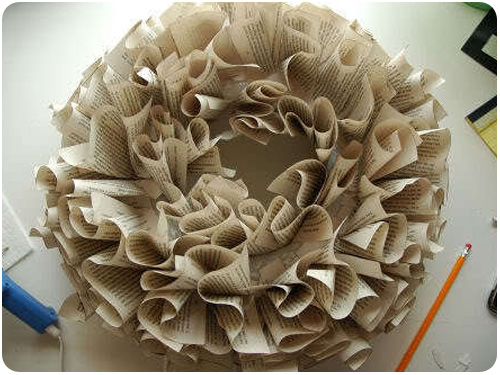
a little bit holiday & a little bit diy. despite a lack of religion, i do like the hanging of decorative wreaths during the holidays. i’ve tried like the dickens [well, not the dickens] to get this succulent wreath to work, but it doesn’t look anything like the ones you can buy. i might try making something interesting out of the eucalyptus & peruvian pepper in the park, but if you’ve got crafting on the brain for unexpected holiday ornaments with a handmade touch, re-nest.com offers: craft with what you already have: 10 diy wreaths.

design industry

emigre no. 70
[image: designersreviewofbooks.com]
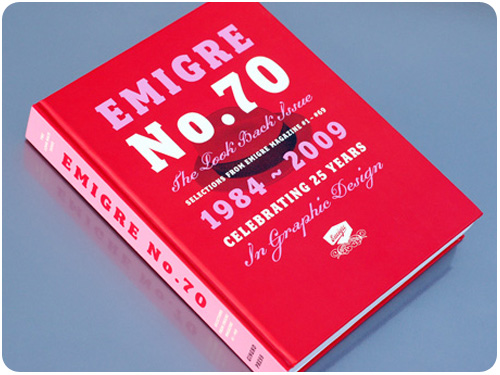
a little bit design industry & a little bit typography, and a LOT of good old émigré! i don’t know about you, but i’ve still got a collection of the free quarterlies they sent out in the 90s that i treasured from the moment of arrival, so cool & so fun. i’m interested to take an hour or a week looking through this one. take a nice preview here: emigre 70: the look back issue.

i really liked this one from logodesignlove.com: building your design business: promotion, and not because i’ve done almost everything on their suggested actions list, either. the giving aspect is what i see in my favorite companies, partners & colleagues, and it’s what i look for in collaborators. promotion isn’t about banging people over the head [i’ll try to remember this in my daily tweets & facebook bombardments], it’s about being cool.

another greatly supportive piece from designspongeonline.com: biz ladies: establishing relationships with advisors. it’s so important to have mentors and trusted confidants you can bounce ideas off and get advice. if you haven’t cultivated a circle for yourself, they’ll show you how to get started.

let’s get realistic here, it’s the holiday season, and i’ve already started hearing about the difficulties with work-life balance, and it only gets harder this time of year. freelancefolder.com wants to help: six dilemmas that freelancers face over the holidays.

beyond design

wine: is this design or wine or beyond design & wine? sf moma has this amazing show through april, and fastco design wrote up a preview: how wine became a billion dollar high-brow hobby. i’m definitely going to have to make a beeline for it on my next trip up north.

food: anchovy haters, step aside! when i saw this recipe i fell in love. i can picture what it tastes like, and i’m going to make it with my last slice of puff pastry in the freezer: pissaladières [onion & anchovy tarts].

los angeles: it’s a little bit food, a little bit los angeles, and mostly the first in a series about seasonal eating for laist.com: seasonal eats: persimmons.

fashion: do i write about fashion? no! but i aspire to some of it, and when i read some good, applicable stuff, i want to share it. nubby twiglet just fine-tuned her closet in this extremely virgo way i totally get on an astrological level. it’s sensible, utilitarian, and she has amazing shoes!

article of the week

efficiency is free by seth godin

it’s more of a blog post than an article, but a simple thought that’s been a lesson i’ve learned in my own experiences and a philosophy that drives how i live and run my business. invest in the best practice upfront, build the right system, do the right thing.

& have a great weekend!

article of the week

Kill Your Inner Cynic by Haris Fazlani

maybe it’s feel-good friday over here, or maybe i’ve just noticed how much better everything goes when people connect with positivity in their lives and careers. either way, if you’ve got some nagging voices dragging you down, fazlani’s guest post for succcess.org will give you some pep talking on how to squash it.

biznik article of the week

If You Want Something Done Right, Hire an Entrepreneur to Do It! by Caterina Rando

if you’re in the position of running a business and need specific work done, but it’s not enough to keep an employee busy in the long term, there are all kinds of solopreneurs who probably focus on the exact task as a niche. rando takes the position that employees can’t serve every purpose, so why not divide what you might spend on payroll and go to the experts. she maintains 15 entrepreneurs as vendors rather than having employees and her article is a great list of criteria she looks for when deciding on who to work with.

7 ways to have fun at work

7 ways to have fun at work

following a theme around labor day, the LA area chamber asked me to present to the bimonthly referral breakfast on taking the labor out of labor and making work fun. i’ve heard a lot of talk from friends about workplaces blocking social networking sites or banning other non-work activities in an effort to get employees focused on spending more of their day working. i have always found this to be a silly idea. people need breaks, they’re not machines, so if it’s not facebook, it’s going to be something else. why not accept breaks and non-work activities as part of the workday and take them back so people are happily contributing in a variety of activities?

creative brainstorming: set aside some time to work on upcoming projects in a freeform brainstorming session. if you work in a big company, take your department or some crossover folks from related departments. if you’re a small studio, select the team assigned to a certain project. if you work on your own, set up a group of other independent professionals in your industry. get everyone out of their offices and start some open creative discussions on how best to approach the next assignment or project. bouncing ideas off others can help refine them before work is done, or inform you on a new direction you hadn’t considered. in many cases, ideas are the most valuable thing we sell, so giving people an open space where they can play and cultivate them helps everyone get to better ideas.

improvement strategies: this is going to sound meta, but i think it’s important to get outside of work and then talk about work and ways to improve workflow. rather than assume you have a finished system, treat it like an evolving creature that’s best managed by allowing for change and improvement by the people running the workflow systems. take your department or compose a group of people from related departments. if you’re in a small company, include everyone. if you’re on your own, compose a group from within your industry with similar challenges and systems. for each meeting, pick one system, talk about how it’s going and let the people directly involved contribute their thoughts on improvement. allowing people to contribute improvements on the way they work makes them feel valued and engaged. they know what they do best, let them help make it better.

net-walking: why settle for the same old status meetings in the conference room or around the boss’ desk? get your blood circulating and get outside for a walk & talk meeting or department check-in. or if you work on your own, set up a net-walking group where you talk about how things are going, and set out your goals for the next week. this kind of outing takes the same amount of time as a sit-down meeting, but it gets people energized and makes everyone feel good that the idea they need to do everything work-related inside is a myth.

plan a field trip to a relevant site or exhibit: support professional development on the job with periodic group trips to places relevant to your industry. if you’re a design team, visit a design-related museum exhibit every other month and alternate with visits to print vendors or lunch with your web development team. if you work on your own, set up a professional development group with meetup or your local AIGA chapter and go to events together or set up vendor tours as a group. when you learn about the systems that affect your own workday, you can better plan around how those systems work, and work with your vendors more effectively. and if you’re just going to look at really cool stuff, well, that’s inspiring for the times when you get to make really cool stuff!

research & presentation group: rather than expecting employees to do research on their own time, make it part of the workday. whether you work for a company or on your own, compose a group that does 1 hour of research on relevant topics to work or the industry, and meets once per week to bring their favorite item to share and present. everybody benefits from each persons unique perspective, and you can actively build a collection of great resources.

networking lunches: the concept is pretty simple, but usually doesn’t get organized as a team building experience. choose a group of main contacts from a few departments, or a list of cross-disciplinary solopreneurs [2 print designers, 2 web developers, 2 illustrators, 2 photographers] , and have lunch on a biweekly or monthly basis to build relationships, learn about what each person does and expand your own horizons. you can let them be freeform networking, or pick a theme or discussion topic and address something new each time. giving people who have a working relationship a chance to know each other better outside work allows them to see the bigger picture of each person’s workday, and they work together more harmoniously in the future.

team building outreach: one great way to focus on relationships and team building outside the office is to organize outreach efforts. pick an organization you’d like to support, and assemble a team to participate on behalf of your company or industry. you can walk or run for a fundraising charity, get a group of green thumbs to help with organizations that replant green spaces, or take time out of the holidays to work at your local soup kitchen. what does this do for work? it gives people a chance to get outside their roles and work together outside structure, solving problems as a matter of consensus, and getting to know each other better as part of the process.

aside from the benefits we try to quantify when justifying indirectly productive activities, these things are fun and engaging, and make for motivated people who feel valued beyond simply their contributions to work. support and appreciation for professional development leads to self-motivation, which is invaluable in the workplace, but it starts by making room for it and letting go of the false work ethic dictating that any time spent away from a desk is time lost. rather, it’s time invested.

if you liked this article and want more like it, sign up for the parlato design studio newsletter for your monthly power shake of design, branding, marketing & promotion!

creative inspiration

http://vimeo.com/moogaloop.swf?clip_id=4249739&server=vimeo.com&show_title=1&show_byline=1&show_portrait=1&color=&fullscreen=1&autoplay=0&loop=0

Hi-Fi from bante on Vimeo.

branding

secca animated logo
[image: pentagram]
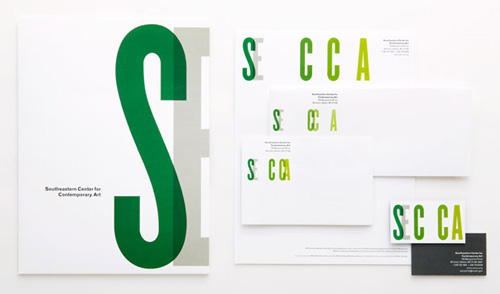
this brand & identity for secca by pentagram is not only stunning, it moves! read up on it here: pentagram’s luke hayman on how multimedia is transforming branding, from fastcodesign.com.

print design

lan su visitor guide
[image: sockeye creative]
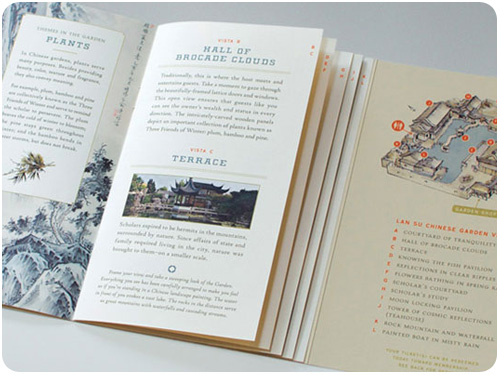
this lovely print specimen by sockeye creative for the lan su chinese garden in portland is rich in details that make the experience of interacting with it really rewarding. a custom die-cut window over a stylized illustration invites you in, then the unique binding of a gate fold over stepped pages detailing the vistas makes you want to flip through and study each one. fantastic work! see more here: lan su visitor guide, from underconsideration.com.

web design

a series i found on uxbooth.com included some useful articles i wanted to share for web designers. a complete beginner’s guide to design research, overcoming the obstacles of usability testing and the complete beginner’s guide to web analytics and measurement.

creativity

bottle rainbows by johnny miller
[image: johnny miller]
amazing rainbows and color gradients created with colored glass and light, by johnny miller. thanks, oh joy for the link!

since creativity is about how you think, here are 2 articles i found interesting from around the tubes this week. seth godin talks about how we analyze our inner monologue to help define intuitive marketing: monitoring your internal monologue, and succcess.org explores the einstein quote “imagination is more important than knowledge” here: be smart, know smarts ain’t the answer.

design industry

ravi sawhney talks about his new book predictable magic here:forget praying to the muse, create design magic on demand, from fastcodesign.com

tim lapetino of hexanine talks about how to get the most out of your kickoff meeting: the art of interviewing your client, from logodesignlove.com.

a post chock-full of inspiring resources: 25 useful videos and presentations for designers, from smashingmagazine.com.

small business owners & sole-proprietors, take note: biz ladies: free online resources for business owners, from designsponge.com

creative inspiration

color

rainbow project in rio de janiero by favela
[image: favela]
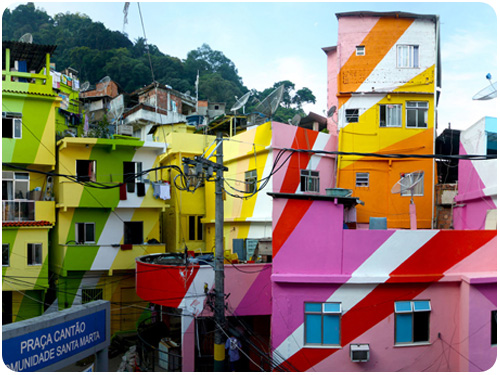
they weren’t so bad to begin with, but this rainbow project in rio de janiero by favela makes these apartments downright tasty! thanks ohjoy for the link!

i missed the first post of print magazine’s series on color wheels, but now that the second one is out, i can share both here. look at these amazing retrospectives on color exploration through the ages!
the wonderous color wheel, part 1
the wonderful color wheel, part 2
hopefully we’re staying tuned for more…

if those made you want to put down your stylus and get your hands dirty, take a look at creative activities, from freelance switch and see how alternative forms of creative activities can keep your ideas fresh.

if you need a more conceptual way to do this, consider creative block’s design ideas for when you’re out of ideas for process strategies on the fly.

typography

34 typographic sins
[image: jim godfrey design]
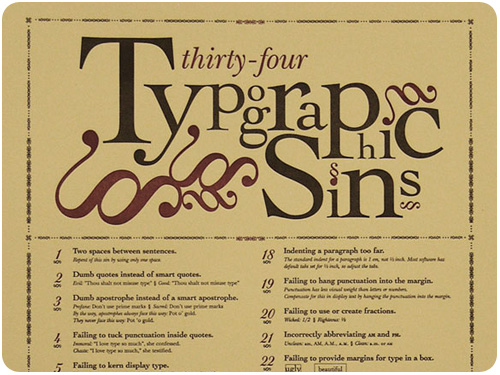
a poster designed around a compiled list of ways not to set type, by jim godfrey. take a look at the full piece at the showcase post on underconsideration.com

we’ve all seen uses of typography that could have been chosen better, especially when it comes to era-specific visual references. typecasting: the use (and misuse) of period typography in movies, from michael simonson runs through some classic stylistic mismatches with entertaining commentary.

want to make fonts on your ipad by drawing with your fingers? these people are willing enablers in this effort!

design industry

sharpie pencil
[image: sharpie]
permit me an office supply love minute here, but sharpie is releasing a liquid graphite pencil that goes permanent after a few days. i have a soft spot for pencils [espcially soft lead mechanicals], and while i realize this is not necessarily what the world needs, i am curious to try it. also, how cute is the sharpie blog header graphic?! thanks to how magazine for the link.

in our ongoing adventure to create great things, i think it’s important to remember that design is for everyone. ravi sawhney asserts designers continue to dedicate an overwhelming portion of their attention and energy toward designing for the top 10% in most developed nations. and he’s got a point. read more of what he has to say in designers are still blind to main street, from fastcodesign.com

consider the factors of a design team, and if you’re working alone, perhaps consider which ones are fulfilled by you and which are done by your client: 4 essential members of a great design team, from michael roller

an interesting look at 4 “ugly” web sites that make millions (and what we can learn from them), from kissmetrics. clue: figure out function first and tell your users how to do it.