article of the week

Befriend the intern to fire up your career by Penelope Trunk

interning has always played an important role as a career stepping stone, and in recent years it’s been booming due to the economy. don’t be so quick to write off interns as simply young and less-experienced, though they may be, they are also driven, career-minded individuals with a fresh perspective who have been tasked with vital roles in their companies. trunk’s article about ways to befriend the interns you meet is a good list of reminders that great people are everywhere—and they won’t be interns forever!

creative co-working

ben thompson & heather parlato co-working at fetch! creative
[image: stuart silverstein]

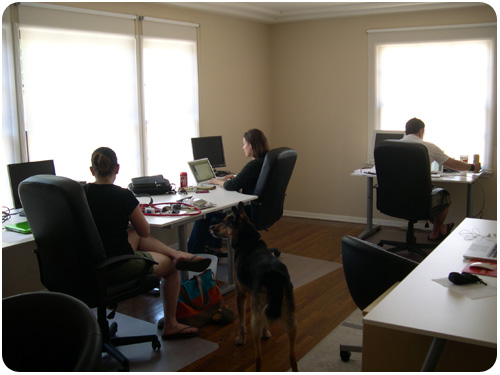
a few weeks ago, at the end of my 4th of july wrap-up i mentioned that i was starting a new work schedule involving co-working with a group of designers. from the minute we all got on board, we were excited about coming into a social workspace where we could maintain our independence as self-employed designers, but still get the support of working with other creatives. it’s been 3 weeks since my first day and it’s been a very welcome shake-up to my routine.

the backstory
thanks to our awesome friend, spencer cross, who started the kernspiracy listserv for designers to connect, share advice & referrals, review software & hardware, and generally discuss our industry, i met all these great designers through ongoing comments on this list and was familiar with them for years before we decided to work together. 2 designers from this group, stuart silverstein of fetch! creative and ben thompson of studiofluid have taken on a partnership to combine and multiply the efficacy of their services in e-commerce design and branding. they got an office space that had plenty more room than they needed, so they decided to ask a few design colleagues if we’d like to set up a co-working arrangement, whereby we rent desks and access to office services, bring our own workstations, and work together. at first i thought i don’t really need to do this, i have an office at home, but the more beth goldfarb and i talked about it, the more we thought it could be a great thing to help us get on track with everything we wanted to implement from the creative freelancer conference, help each other, network more regularly, and add a social aspect to our work we hadn’t had before. so, we decided to do it on a part time schedule. stuart & ben filled the other part time slots with melanie orndorff and dave waite for a really well balanced set of expertise in the room.

beth goldfarb, melanie orndorff & dave waite, co-working at fetch! creative

what’s it like?
we all have a basic schedule, but on any given day you could be working alone [though stuart and ben are usually in the office] or with 2 other people. when someone has a technical question, just shout it out and you’ll probably get it solved in a few minutes. if someone wants feedback on an upcoming project, there are usually a few people to ask about composition, usability & first impressions. we started out having lunch as a group on fridays, but we’re already talking about doing much more.

at least once a week, in the middle of a conversation, someone will say “that gives me a great idea!” and run off to write it down. someone else will need to partner with a compliment to their skill set and pair off to work together. or sometimes, one person is busy and checks with the group to see if anyone can take on extra work. i’m also surprised with how self-directed we are. we take breaks to talk, but we also have hours of headphone-fueled clicking & typing where we’re all cranking out work. it’s a really great environment of creative support with fantastic people.

also, there are dogs. dog-friendly office!

beth goldfarb, melanie orndorff & dave waite, co-working at fetch! creative

there are ways to make this happen in your own group as well. while i think it would be really cool if design firms or often-partnered vendors made room for a few extra desks and offered them up to independent designers, if an arrangement like that is hard to come by, there are ways to do it yourself. you can always put out feelers in your network for like-minded designers and sign on with a co-working space like blankspaces and arrange to meet there on the same days and work together. if you’re more into a collaborative startup environment, idyllic nerd commune might be more your thing. and hey, if you don’t need office equipment and are happy in a coffee shop with wifi, maybe see about one with a bigger table in the back and take a group mobile day.

however you might want to work it, with freelancing and small businesses on the rise in the current economy, i think picking your co-workers for a more supportive & collaborative environment is a great way to work. for me, the perk is that this is on a part-time schedule, where i still get the refuge of the home office for the more quiet, more intense, more cats & pajamas days i still need.

if you liked this article and want more like it, sign up for the parlato design studio newsletter for your monthly power shake of design, branding, marketing & promotion!

biznik article of the week

how saving money on branding can cost you by Maria Ross

another great piece on branding and why it’s so important to put together a strategy from the beginning. ross summarizes it best herself here:

Hiring unqualified people or designers who don’t ask you anything about your value proposition, differentiators, or target audience is not the way to save money. I talk to many people that threw away money because their brand strategy was not baked yet. Good design is a skill: it’s a skill that involves taking a message and communicating it visually, not just creating a pretty picture. You will lose more in lost sales by getting this part wrong than you will save on cutting corners.

And guess what? That brand strategy will do more than just inform your visual identity. It will serve as a compass for other marketing investments: partners, advertising, events. Basically any decision your company makes will be a smarter one if you start with the brand strategy first and use it as a compass. This helps you avoid throwing away money on what I call “random acts of marketing” and ensures that you only invest in activities that move your business forward.

article of the week

finding it by laura belle / ohhishop.com

belle wrote a nice piece i wanted to share about finding yourself in your work and your business, so you can balance your work like with your passions. if you work on your own, you’ve had days where you’ve felt this way or maybe wanted to hear a colleague express the same sentiments, so go soak up what she has to say.

5 things you can do to build your business this summer

5 things you can do to build your business this summer

if you’re in an industry that experiences a slower summer season, it’s a great time to invest in your business so it’s extra-fresh for the next time you get busy. if you’re not sure where to start, here are 5 ideas to build on.

rethink your services
we all concentrate on our areas of specialty, but have you thought about related activities and services you could be offering that wouldn’t shift your focus too far? maybe you’ve been offering a couple services that would make sense to package and target a different sector of the market. perhaps you’re getting a lot of questions on similar subjects and an introductory consulting service makes sense. better yet, give your clients and prospects a little taste of your expertise and personality in a white paper or e-book. if you’re spending some of your extra time on education or professional development, maybe you’re able to branch out and offer a new product or service you hadn’t considered developing yet.

brainstorm: write out a list of all the services you currently offer. think about each one, and try to write one related service you’d like to add, or that could be included by someone who has the same expertise. google some of your favorites—what appears with these products and services that you hadn’t considered before? if you’re up to the task, consider adding the most viable to your repertoire. if you can’t incorporate it now, take a few days to see if one of your ideas appeals to you as a future goal to shoot for.

refresh your site content
building your web site is often the biggest project we work on in self-promotion, and once it’s done, it’s really easy to set it aside and let it do its work undisturbed. we may not be looking at it every day, but possible clients and customers are, and when they have new & interesting things to look at, they stay longer and engage more. additionally, search engines are regularly indexing sites on the web, but if it finds yours and you haven’t updated in awhile, they’ll pass you over for sites with more frequent content changes. you may want to consider an online editorial calendar, so you have a framework for adding new content regularly in different areas of your site [this can work in conjunction with social media, where you tell people about your new content and ask them to take a look].

brainstorm: chart out all the pages on your site and list what content is on each page. read through the content you have currently and see if it’s still 100% relevant or could use some improvement. decide on areas that just need a refresh once for the year, and other pages that could possibly have revolving content, such as announcements, new offers, or archived newsletters you’re sending monthly. if you can’t find current pages for revolving content, think of what you might add that is updated elsewhere, like a twitter stream or facebook business page. then chart out a rough calendar by month and see if you can commit to a schedule of regular updates, whether they’re quarterly or daily.

reconnect with your network
remember the last time someone caught you with a surprise phone call or a nice card just to say hi or catch up? it’s always a good feeling when friends and colleagues reach out, so why not be that person this time around? figure out your preferred method of contact and then do it up proper! if you like calling people, start with your favorite clients and vendors and call to say hello! if you’re more of an email person, write some thoughtful words personalized to the people in your network. as an alternative, you can use your newsletter service to send a graphic email to a larger list. if you prefer cards that arrive by post, pick up a set that appeals to the message you want to convey [or consider having some designed—just sayin!], get out your favorite pen, and author some nice notes. work your way out from your inner circle to those you speak to less frequently. get social media involved for the people you connect with online.

brainstorm: sometimes reaching out takes several forms of delivery. in fact, maybe it’s time to update your contact database with some of those cards you’ve picked up in your travels that are piled on your desk. you can use contact management software to note which mode of contact different friends prefer, and split them up by how you might contact them. then, get creative and make it happen!

revisit your brand touchpoints
you can get some great help identifying and brainstorming on all the possibilities for brand touchpoints here. once you have a solid list, take some time with each one, ask yourself if they’re reaching your clients and prospects in the way you want them to. maybe you’ve been working with some new niches or personalities that interact with different items or information sources. evaluate which efforts you want to stick with and which are ready for hiatus. take notes when you’re out and about, what catches your eye, how have other businesses decided to interact with you in ways you thought was clever or well-placed? are you missing some cool twist in the lifestyles of the people you work with?

brainstorm: list out the brand touchpoints you’re currently using, then write as many possibilities for interaction you can think of next to each one. do these modes of interaction give you any ideas on similar items or resources you could use in the future? have you asked clients how they’ve found you or do they report on anything you’ve been doing that got their attention? is it time to start asking those questions to settle any doubts about your efforts?

reward yourself for a job well done
every time you spend time improving your business services and communications, you’re investing in yourself, so set some of this summer fun time aside to celebrate with a reward. we all work better and smarter when there is balance in our lives. give yourself that afternoon hike, take a night of overtime off, get yourself or your business a gift, or take yourself out for ice cream or soda.

brainstorm: aside from the pure rewards for a job well done, find ways to infuse fun into your business. can you go analog for the day and review paperwork or resource material at the park or the beach? do it! are there wifi hotspots or cafes with free wireless where you can go mobile for a change of scenery? try it out!

me? i take breaks for walks, bike rides, or a run on different days, but my new goal is to find a public pool i like and jump in a few times per week. and i’m a big believer in homemade fruit pops on hot days. nothing like an icy blended fruit pop!


biznik article of the week

A Culture of One: What Solopreneurs Can Learn from Zappos by Beth Buelow

i really like this article about creating a culture of one by aligning with your values and attracting clients of like minds. When you choose to create a Culture of One, you have decided to transform your viewpoint from seeing yourself as a one-person shop to proactively building a community based on core values. Your business choices are determined by aligning values –> culture –> brand. she then gives the reader steps they can follow to move into this business mindset. great article!

article of the week

we are all brand anthropologists from hexanine.com.

a great perspective on how brand perception evolves through customer experience & feedback. mind your brand gaps!

article of the week

10 reasons why investing in branding makes you money in e-commerce by Stuart Silverstein

while this article is focused on building a brand to improve an e-commerce site, i silverstein is a friend and colleague who sees without a doubt that a smart brand strategy will improve sales for any business. he takes 10 solid points and explains how branding affects each in detail, in a way both partners and clients can understand. for me, this is a great article, because while i already love the power of branding, it’s really helpful to see how it applies to e-commerce.

biznik article of the week

bad boundaries, bad business—are you too nice? by jovanna joan casey

i like this article, because boundaries are a very common issue among small business owners. it’s part of the process of getting to know yourself in business, defining for yourself what your polices and boundaries are, and sticking to them. we train our clients through the actions we take, so we may think we’re bending rules or making an exception, meanwhile the client comes to expect this as the norm. i think casey does a great job of describing each type of boundary issue and helping readers identify where they might be getting into trouble.