is your social media marketing working for you?

social media communities have been around long enough to have a first generation in their wake, so it would seem we’ve all had enough time to learn their ins & outs. while many of us have mastered the art of staying in touch, i’m seeing a common thread among clients and colleagues alike: many of them are spending more time creating content and cross-linking these communities to each other than whipping them into the marketing strategy they came for in the first place.

sharing content online is all kinds of fun, and a great way to raise awareness, but using it for marketing should always be part of a bigger plan to connect back to the content you create on your own site. if you’re spending all your time creating awareness on social networks without consistently linking back to your home base, you’re working for them—for free. that’s not what you got into business for! but hey, it’s okay — you can turn the tables anytime and start making them work for you.

best practice vs. a common example

marketing in the social media arena should be an all-roads-lead-to-rome strategy by the most direct route possible. think of it like a multiple funnel system, where each funnel is a social community designed around a unique aspect of how people like to communicate. creating awareness about your business or projects is as simple as participating in the communities that suit you best, and periodically saying “hey guys, i’m doing something cool, come take a look” with a link to the most relevant landing page on your site. participation and link strategy should look like this:

best practices for social media marketing link strategy

however, that’s not always the case. what i often see when i analyze a social media campaign in need of help is that some link strategies are sending users to 2 or 3 different communities to get piecemeal information, with links to the main site infrequent at best. the mistake here isn’t just that you never get eyeballs on your site, it’s can also be a turn-off to your audiences too. each of them have made a conscious choice about the community they prefer, and would be a lot more likely to check out your site than trek around to communities they don’t like. here’s what i generally find when social media marketing is a bit scattered:

example of a scattered social media marketing link strategy

lots of effort going everywhere but home

sites like facebook have so many tools to keep you busy creating content [for them] that it’s easy to spend all your time building photo albums and posting informative updates while forgetting to promote your own site. in their desire to compete, social networks provide apps for automatically updating other communities, which is really just traffic-poaching disguised as a convenience tool, giving you crappy-looking updates in the process. [ever seen a truncated facebook post & link on twitter? do your twitter followers even care about facebook anymore?] or sometimes, it’s just easier to think “but all my videos are on youtube, why not just send traffic there?” youtube subscribers may be a secondary benefit of hosting videos there, but the videos should be embedded and showcased on a relevant site page of your own.

don’t send your audience on a wild goose chase for your content. first thing’s first. put the time in on your own site or blog to make sure anything anyone would want to know about you or your business is easy to find. create the content you want to share there, around one main idea at a time, and then report on it in each social media community with a direct link back to your blog post, or relevant pages on your site.

put yourself first

the first place to generate content is on your own site. if you need to make regular announcements or have new and changing content you want to talk about and you don’t have a place on your site where you can do this, it’s time to get one [hint: i can help]. consider adding a blog where you can update revolving content. make your full announcement here first, with complete information and photos or videos, when applicable. this is what you’ll be linking to everywhere else.

the philosophy here is that you’re training people to learn that your site is where it’s at for any information they’d ever want to know about you. sure, they’ll catch your posts on twitter, facebook & tumblr, but after 3-5 times of clicking through to your site, they’ll make the connection that they can always find what they need on your site. and hey—people who don’t use ANY social media will be able to find it there too, imagine that!

choose your communities and let them know

write custom posts for each community, tailored to how each one showcases information best. i understand the temptation to save time by writing one great post in one place and let that service distribute it for you, but these distributed posts rarely look good elsewhere. often, they take your snappy teaser copy and truncate it to nonsense, replacing half of your sentence and any photo with a generic link [so they can advertise their great service to another sucker]. if you truly believe you don’t have time to write one sentence for each community you’re in, get honest about which ones are a priority. a half-sentence tweet that only links to facebook says loud and clear: “i don’t care about twitter.” keep your community members in mind, and write directly to them. “hey guys, i have something cool to show you, here’s why you might like it,” post your link, select the best photo preview if applicable, and send it off.

need an example?

i’ll walk the talk here for you. first, i wrote this article and posted it here on my blog. i usually write these articles as the main entrée to my newsletter, so i wrote and sent my newsletter. then i went to facebook and posted it on my business page. the same goes for linkedin, though they are tricky to link to, and google+. i created a shortened url so i’d have most of my 140 characters to tease it on twitter. if this were a creative inspiration post, i’d pin it to my pinterest board of the same name. i created my content and reached out to each community individually with a unique message to let them know about it, linking right back here. and at the bottom of this post, i let you know that you can get more useful info just like this in my irregularly-delivered newsletter.

but what about building community on each social network?

hey, there’s nothing wrong with adding to your photo albums and posting quickie updates without always linking to your site — AFTER you finish your self-promotion, that is. give your facebook fans photos to share, post instagram shots to twitter & tumblr, encourage conversations, share support information and press that links to other sites. blend these things in as you see fit, just make them secondary to your main objective…YOU!

have questions?

these are the basics, but there can be a few levels of social media engagement integrated into an overall marketing plan. my penchant for organizing these strategies is also a service i offer. if you need help figuring out how to implement a system like this or want to fold some existing efforts into an overall campaign, reach out and we’ll figure it out!

if you liked this article and want more like it, sign up for the parlato design studio newsletter for your monthly power shake of design, branding, marketing & promotion!

happy monday

happy birthday motor

my little lady is 17! still patrolling all corners of our home, keeping watch on the neighborhood from select windowsills and taking the occasional jaunt down to the patio for some choice sunbathing. here’s to you, motor, happy birthday!

notes from caveland

so, i’ve been following a modified paleo diet lately, just stripping down to the basics to reset my system, and at about 2 weeks in, i feel like i’ve settled into a stride. it’s a bit weird not to have some of the comfort go-to’s, but a little sleuthing and experimenting has led me to some pretty good finds. here are some little pick-me-ups for anyone kicking the sugar habit, off gluten & grains, or avoiding dairy [for the record, i’m also off legumes, which includes peanuts & soy].

rose water and orange blossom water

fruit salad dressed with rose water – your sweetest dessert treat is fruit on the paleo plan, but that doesn’t mean some nice cave-person from one cave over wasn’t, uh, distilling rose water for you to dress it with. ahem. while distilleries aren’t exactly ancient technology, rose water has no added sugar and imparts a deliciously fragrant perfume to your fruit salads.

soda with lemon & orange blossom water – sure, soda with lemon is a go-to [and very easy if you have a soda stream], but dress it up & live a little! orange blossom water is a sweetener-free addition to soda and tea [and cocktails for when you return to the future].

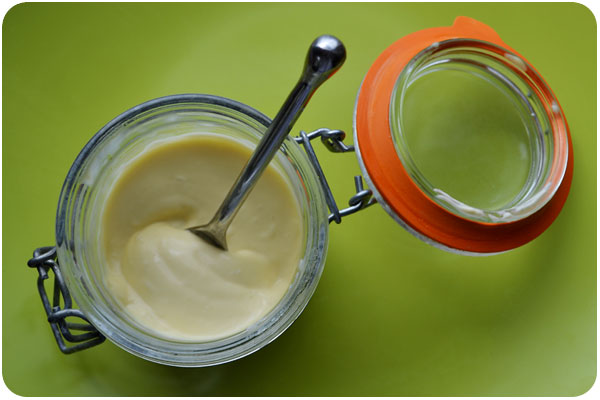
homemade aioli
homemade aioli

homemade aioli – if you’re pro-mayo and trying to eat paleo, it’s a great opportunity to try your hand at homemade mayo. i like thomas keller’s whole-egg aioli recipe, which is easy to whip up in a blender. awhile back i made a huge batch of sugar-free smoked chili pepper sauce, but you can easily use what you find at the store to spice it up into chipotle aioli or dijon or whatever you like.

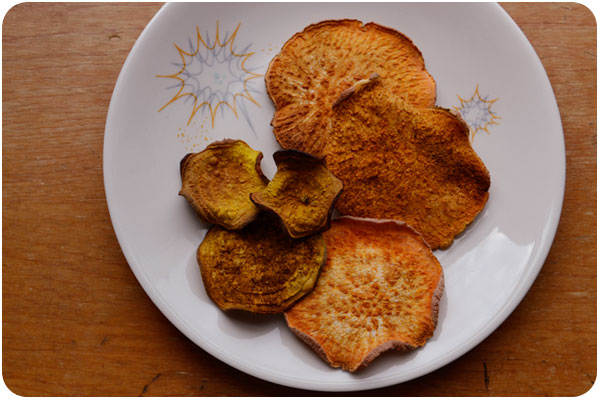
sweet potato and golden beet chips
sweet potato and yellow beet chips

baked root vegetable chips – one of the great ironies of this diet is that you can eat guacamole, but not most conventional chips. i decided to try my hand at baking chips from sweet potatoes and beets, and found they’re easy and satisfying to make! they come out like terra chips [most of which also have no added sugar], and the fun part is you can season them any way you like. try soaking in lemon, lime or vinegar and then sprinkling on a mix of spices and salt. use a dehydrator, or bake in a low oven, turning often as they dry and curl. the chips will shrink in size, so cut the roots diagonally if you like larger chips. beets shrink up quite a bit, and are best for snacking on a satisfying crunch, but sweet potatoes are large and sturdy enough for salsa and guacamole.

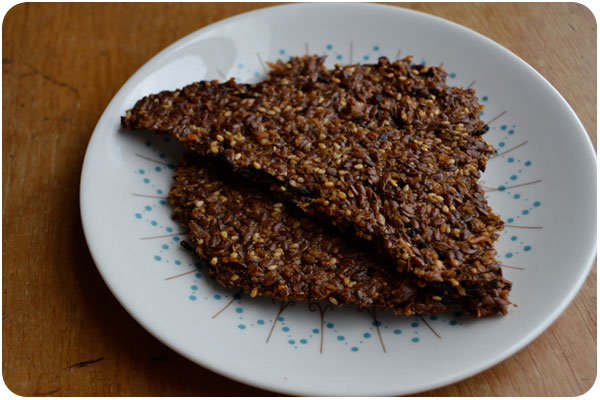
sesame flax crackers

flax seed crackers – i’ve experimented with these in the past with mixed results, but after a spin through the raw section at whole foods, i was inspired to revisit my efforts. i came up with a combination i really like, using flax seeds, shredded coconut, almond meal, sesame seeds and crumbled hijiki seaweed soaked in a mixture of coconut aminos, sesame oil, ginger juice and water, seasoned with salt and cayenne pepper. spread it to .25″ thick on oiled aluminum foil and bake on low heat to dehydrate. i baked mine above 105º so it’s not a raw food, but it’s light and crunchy with a cayenne kick.

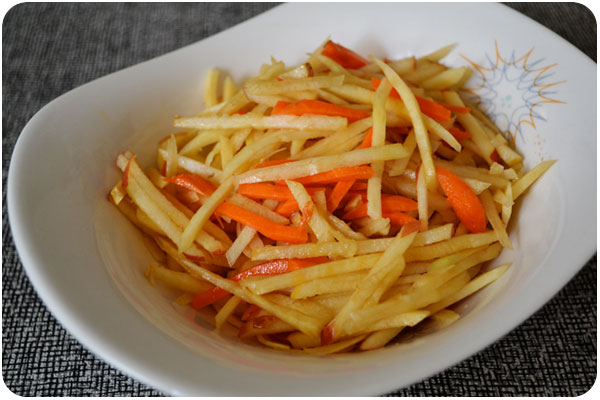
rutabaga carrot & apple salad

rutabaga carrot apple salad

i was wandering around the farmer’s market last week, thinking about how i’d written about so many different foods that what else could i experiment, and then i saw some rutabagas and realized i’ve never even had one. from what i’ve read, these weren’t the finest examples [the best advice is to pick smooth, unblemished roots, and the ones i found had cracked ridges around the tops], but i thought i’d take them home and do a little experimenting.

i can see why they’re only preferred in desperate, world war famine times. they’re sort of neither here nor there, and often served in a group with a selection of other root vegetables. one reason may be its natural bitterness which comes out with cooking. i decided to try my hand at baking my own root vegetable chips, and while sweet potatoes and beets turned out nicely, rutabagas are not a good choice for this.

this brought me back around to eating them raw, which is quite nice. they’re crunchy, lightly sweet, full of fiber, and taste fine on their own or with your favorite dressing or dip. since i love shredded salads, i thought the taste would work well with some carrots and apples, and a light vinaigrette.

rutabaga, carrot & apple salad

1 rutabaga
1 large carrot
1 fuji apple
1 tb roasted walnut oil vinaigrette dressing

break out your julienne mandoline [or super chef knife skills] and shred up the rutabaga, carrot and apple into a mixing bowl. prepare your favorite vinaigrette, or use the one i suggested [i’m way into this roasted walnut oil lately] and drizzle it over the top. mix well to coat, season with salt & pepper and enjoy!

creative inspiration

branding

lucy's fried chicken
lucy's fried chicken, image: underconsideration.com

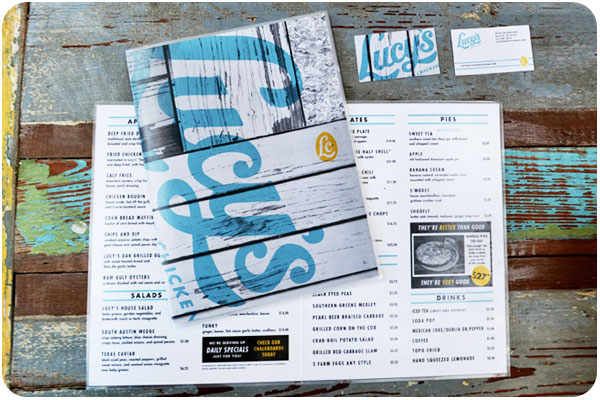
this week we’re looking at type-forward design, kicking it off with this bold branding for lucy’s fried chicken. i love how the outside of the menu shows the logo as an overprint on wood, while the inside is a nice, clean layout of fare. see the whole spread at underconsideration.com.

packaging

stoke bomber beer
stoke bomber beer, image: thedieline.com

i’m loving this all-type packaging for stoke bomber beer. apparently this brand has always used some form of retro imagery, but this line is their foray into ww2-era nostalgia. peruse the write-up at thedieline.com.

typefaces

highway font
highway font, image: friendsoftype.com

i’m just looking for a good excuse to use highway by dan cassaro, with all its swashes, ligatures and alternates. and at 39 bucks it’s a damn good deal.

letter cutting

letters & stone
letters & stone, image: ilovetypography.com

the modern-day convenience of fonts usually only serves to make hand-setting letterpress a timely chore, but what about good old stone letter cutting from the age when serifs were more than a decoration? check out ilovetypography.com‘s interview with fergus wessel to learn more about a modern-day letter cutter.

spring garden 2012

garden spring 2012
garden spring 2012

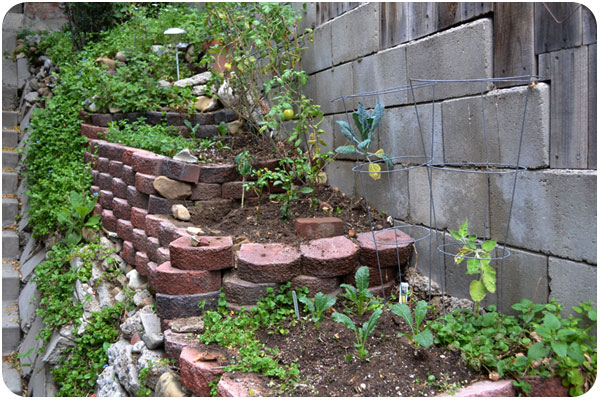
i think it’s my 4th season with my little terraced garden that i built into our back wall & fence. in past years, i’d cram as much as i could into this space, hoping for the best, but i’ve had to learn [through repeated broken delusions] that this spot gets only 3-4 hours of full sun as it passes overhead to shine between our building and back fence. this means that, no matter what i do, i’ll only get about 5 tomatoes in this space, and if i plant zucchini, it will shade everything in the same terrace. the lower containers often have dappled shade from a nearby avocado tree, and are best for greens. i think i’ve finally accepted this and chosen a realistic selection of veggies for the space i have.

flowering arugala
flowering arugala

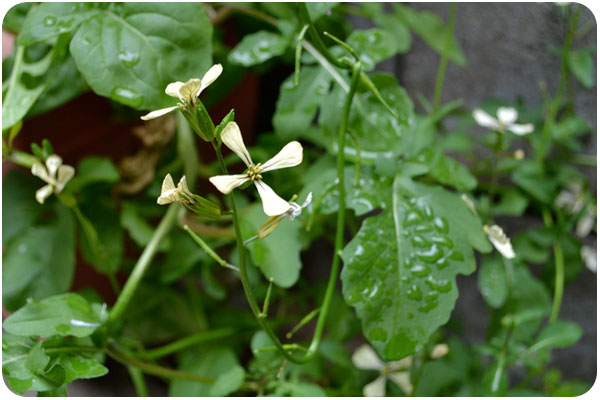
for one thing, this probably means that any fall gardens i plant are for winter greens only. some of the lettuces come up, but many don’t until early spring, which was the case with this arugula i forgot about. time to harvest that for salad and start over. the lemon balm i planted to confuse pests was not only easy to grow, it spreads easily too! i left babies in each location, but harvested the bulk and made a large quantity of tea.

upper garden, spring 2012

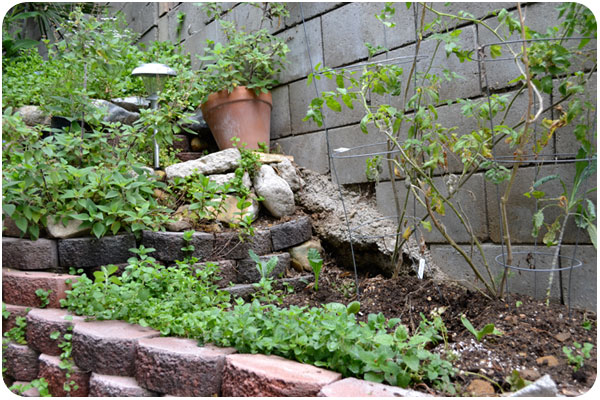
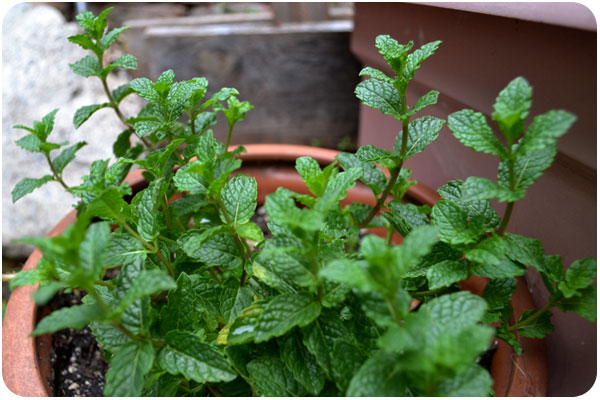
leaving the compost to really break down all winter worked well. i turned it over and dug out the black gold to incorporate into each garden bed and container. i also let some of the garden stay wild. tomatoes from last year are flowering early this year and even have a few fruits, so i’m leaving them to see how they do. there’s also some spreading greek oregano that’s so soft and succulent, i left it as another pest deterrent even though it’s more than i’ll ever need. last thing i did is add potted mint to move around as needed. since pests are looking for their preferred plant’s attributes, scented herbs and bulbs [like onions & garlic] tend to confuse them, protecting the plants organically. this year i might try some bird feeders as well, see if i can get birds to eat some of the unwanted bugs.

what i planted this spring:

apache peppers – i hadn’t heard of these before, but since they came in a 6-pack and do well in containers, i bought them. they can get up to 80,000 scoville units in heat.

basil – there’s never enough basil, which is why i started with 2 plants, italian basil and lemon basil, and figured on planting seeds for a subsequent crop later in the summer.

bush beans – i’ve never really tried these and don’t exactly have high hopes based on my pea-failures, but i have the seeds and the trellises…

chamomile – i have never been successful with chamomile from seed, so i bought a plant. it likes full or partial sun, so it’s going in the partial container.

chives – if you think you can’t keep any plant alive, please try chives. i put them in a sunny container, ignore them, and they reseed themselves every year. i think my current batch has finally exhausted itself, so i decided to start over.

lacinato kale – if you like kale, you can’t really go wrong with a 6-pack of tuscan kale. they grow all year in southern california, and if you pick it fresh, it’s so tender you can enjoy it raw in a way you can’t with even farm-fresh kale that’s traveled.

leaf lettuce – i’m going to see how many crops of leaf lettuce varieties i can go through in the partial-sun containers.

lemon thyme – just as it sounds, lemon thyme has a lemony flavor and scent. i can’t think of a time that i’d object to this, so i skipped regular thyme and went straight for lemon [i’ll plant thyme seeds instead].

mexican zucchini – the description of these is that the skins are a variegated lighter green, which i’ve seen at the farmer’s market. i think they’ll be pretty, so i got 2 for good pollination.

micro-greens – though you don’t have to buy a pack of seeds called “micro greens” to do this, i did, and i think they’ll work out perfectly in my partial sun containers.

pea greens – my sunlight doesn’t do so well with full peas, but i’ve since learned that they’re fine to grow in containers just for the shoots & tendrils, so i’m aiming for those this year.

purslane – i harvested seeds all last summer & fall from the wild purslane that sprung up around my property, so this year i’m planting up the hanging full-sun containers on the front porch to take advantage of this amazing superfood.

scallions – what i wrote about chives goes the same for scallions. it’s so nice to grab some green onions from the front porch.

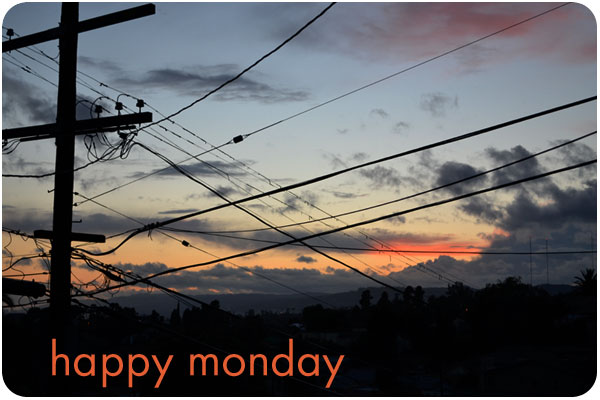
happy monday

we have these great west-facing windows that afford us lovely sunset views, but when i go to take a picture, i suddenly realize that my mind has erased all the telephone poles & wires. in the past i’ve hiked higher up the hill for a better shot, but i’m going to try to accept them more, and make them part of the composition.

always a sucker for the salton sea

America’s Dead Sea from Jim Lo Scalzo on Vimeo.

i saw this post last month on thefoxisblack.com and immediately added it to my collection of salton sea ephemera. such a fascinating artifact of rapid ascent and decline, i don’t think i’ll ever get tired of wondering about it. this video uses the narration of a film from its heyday juxtaposed with current images, capturing a great deal of the stark transformation that’s happened there in a mere 50 years.

glazed purple sprouting broccoli

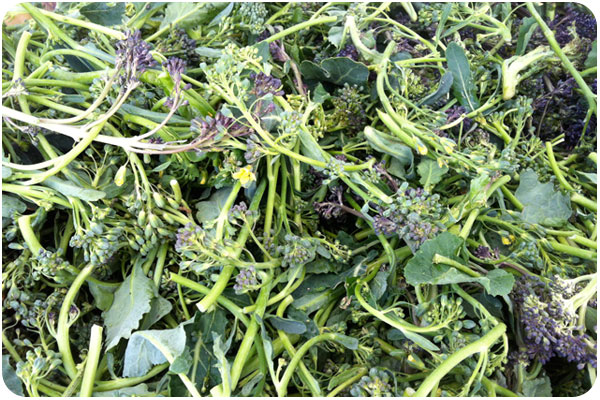
purple sprouting broccoli

i’ve been seeing the rapini in the farmer’s market lately and wanted to get my hands on some to work with it more, but then i saw this nice table of mixed young green and purple broccoli sprouts and and had to have it for the color alone. this isn’t actually rapini, but purple sprouting broccoli, which is a variety of broccoli that comes in with purple buds and lots of smaller stems. they’re very cute and do well lightly cooked to retain their crunch.

i also recently got some toasted walnut oil after tasting some and loving it. the bottle has this vinaigrette recipe on it, which i made for topping this dish, and it’s really delicious.

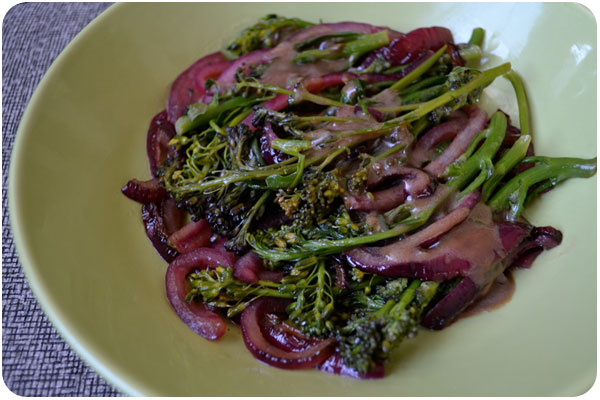
glazed sprouting broccoli & caramelized red onions

glazed purple sprouting broccoli & caramelized red onions

1 red onion, sliced thin and cut once crosswise
1 lb purple sprouting broccoli
1 tb butter or ghee [i used ghee]
1 tb white wine vinegar

place half the tablespoon butter or ghee in a frying pan and melt over medium heat. add the sliced onions and tablespoon of vinegar, sauteeing until browned on edges and soft in texture. remove from the pan and set aside.

layer the broccoli in the same pan, place the remaining tablespoon butter or ghee over the top, and add about a quarter inch of water to the bottom of the pan. cover and steam on low heat about 8 minutes or until al dente.

arrange broccoli and onions on a plate and serve. optionally, drizzle with your favorite vinaigrette [mine was toasted walnut oil, balsamic vinegar and dijon].